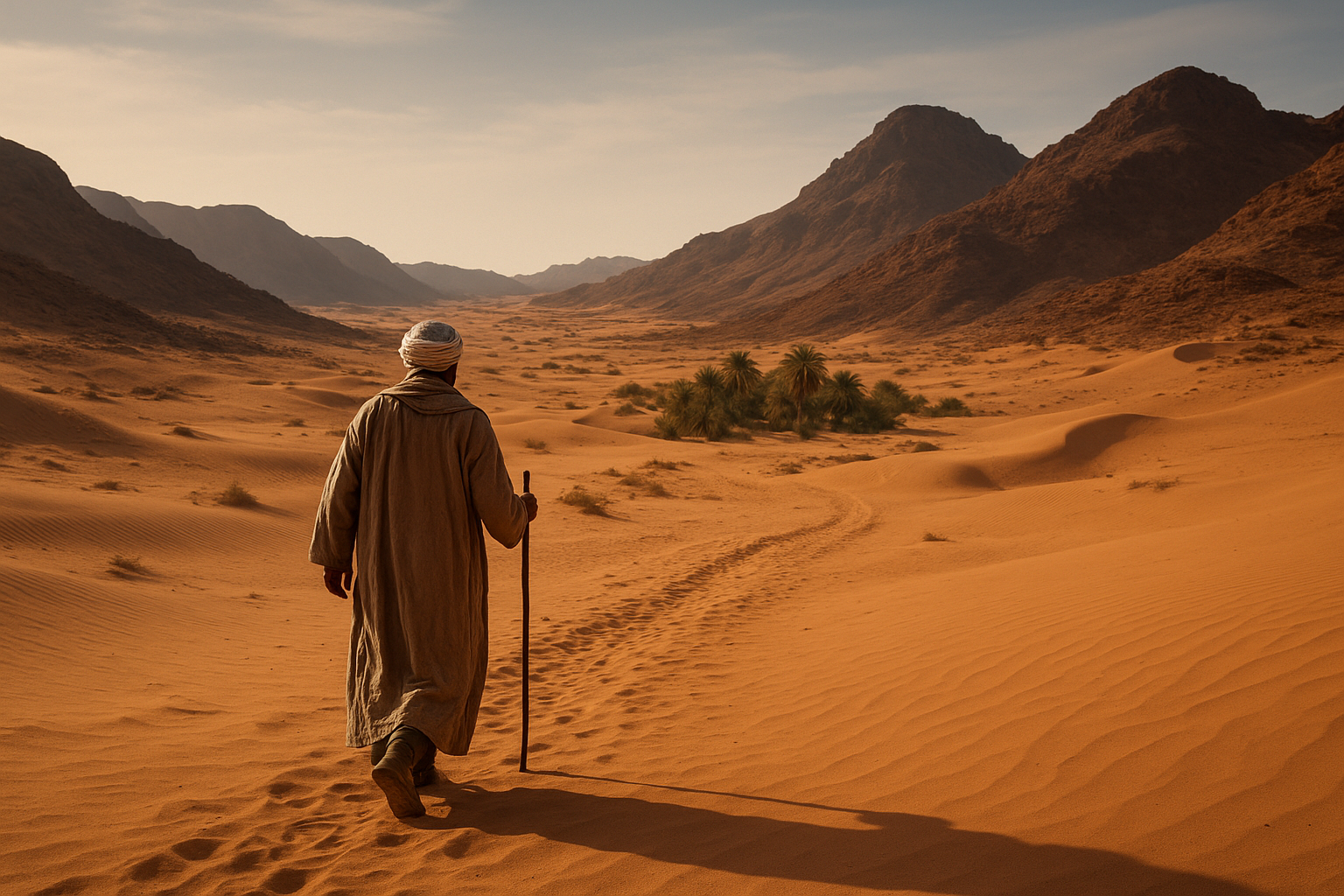
Pilgrim’s Tales from the Desert: Arid Paths to Inner Oasis
The desert, an expansive wilderness of seemingly endless sand and sky, stands as a metaphorical and literal landscape where individuals embark on journeys of self-discovery. The harsh conditions juxtaposed with the profound silence offer a fertile ground for tales of introspection and transformation. This article explores the narratives of those who have traversed these arid paths in search of their inner oasis.
The Desert as a Metaphor
The desert has long been a powerful symbol in philosophy and literature. Its emptiness is both a challenge and a promise for the seeker. The French philosopher Albert Camus captured this duality in his work, describing the desert as a place where the soul’s mere survival becomes a testament to the human spirit.
“In the depth of winter, I finally learned that within me there lay an invincible summer.”
This idea of finding inner strength amidst hardship resonates through many pilgrim tales from the desert, where the harsh environment becomes a catalyst for profound inner change.
Historical Pilgrimages and Philosophical Journeys
The concept of pilgrimage through the desert is not new. For centuries, spiritual seekers have ventured into these vast, unforgiving landscapes seeking enlightenment. One of the most renowned figures to do so was Moses, leading his people through the Sinai desert—a formative journey depicted extensively in religious texts.
In more philosophical terms, the desert journey can be seen as an allegorical path to find meaning and purpose. The existentialist philosopher Friedrich Nietzsche emphasized such explorations of identity and existence. He urged individuals to confront their own deserts of isolation, seeking meaning beyond the comforting mirages of conventional life.
Modern Tales of the Desert
Today, tales of the desert continue to inspire. Many modern pilgrims venture into these barren expanses seeking a reprieve from the noise of contemporary life. These journeys often emphasize simplicity, solitude, and the sublime beauty of the natural world.
- Antoine de Saint-Exupéry’s accounts of the Sahara Desert are among the most famous. In his book Wind, Sand and Stars, he recounts his experiences as an aviator, drawing spiritual and existential lessons from the vast, silent expanses.
- Edward Abbey’s rugged and vivid tales of the American Southwest in Desert Solitaire offer both a critique of modern civilization and a celebration of the desert’s untouched beauty.
- Paul Bowles, in his novel The Sheltering Sky, explores the existential risks and rewards of venturing into the desert’s perilous embrace, reflecting on how the landscape strips identity bare.
The Inner Oasis: Finding Meaning
For many, the ultimate reward of a desert pilgrimage is the discovery of an “inner oasis”—a metaphor for finding peace, clarity, and understanding within oneself. The desert’s starkness can strip away the superficial layers of existence, revealing deeper truths.
Eckhart Tolle, in his work The Power of Now, speaks to similar principles found in the silence of the desert. He emphasizes the importance of presence and awareness, stating:
“The primary cause of unhappiness is never the situation but your thoughts about it.”
In the desert silence, one finds space not only to think but to simply be—unencumbered by the constant demands of the modern world. This stillness allows the pilgrim to connect with the deeper layers of consciousness, achieving a sense of wholeness and oneness with the universe.
Lessons from the Arid Paths
Desert pilgrimages, whether physical or metaphorical, offer several important lessons. The glaring sun and endless horizons teach resilience, humility, and the value of solitude. As pilgrims endure the harsh desert elements, they often experience a profound shift in perspective, gaining a newfound appreciation for life’s simple beauties.
- Resilience: The challenges of the desert foster resilience. The pilgrim learns to adapt and endure, finding sustenance in scarcity.
- Humility: Confronting the vast, unyielding desert humbles even the most robust souls, reminding them of their place in the larger fabric of existence.
- Solitude: In the desert, solitude is not loneliness but an opportunity for reflection, fostering self-discovery and authenticity.
Conclusion
The timelessness of desert pilgrimages continues to resonate today. As individuals search for escape from technological inundation and societal pressures, the desert remains a symbolic and literal place of refuge and transformation. In the stark emptiness, they may find a profound oasis within themselves, echoing the journeys and realizations of introspection’s timeless seekers.
The trials and epiphanies experienced in the desert bear testament to humanity’s enduring quest for meaning and connection amid the empty spaces of existence. In a world rife with distractions, these pilgrimages offer a blueprint for rediscovering the self in silence and stillness.