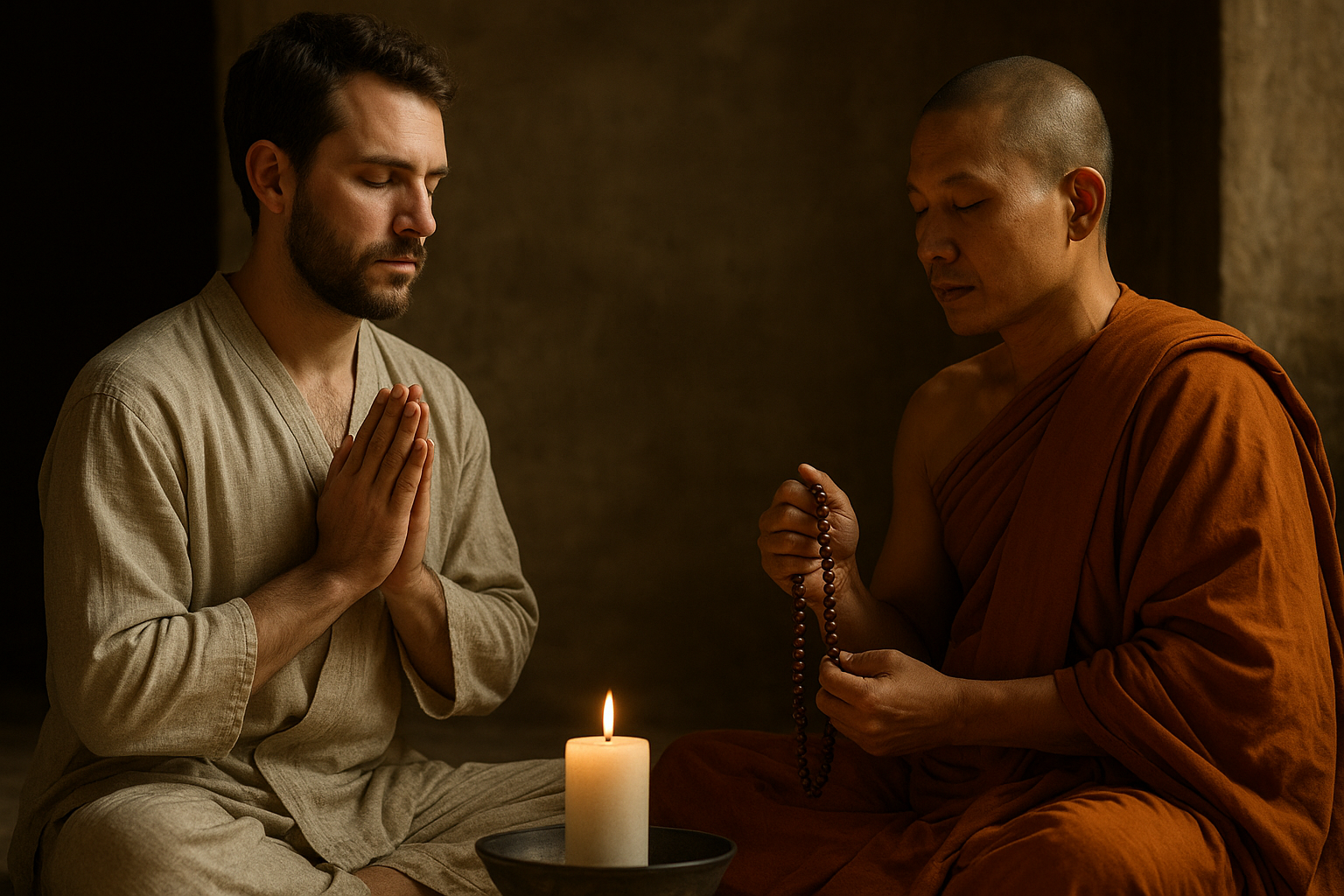
Abrahamic-Buddhist Mystical Practices: Rituals for Unified Faith
In the modern world, religious harmony is becoming increasingly relevant as humans strive to understand and appreciate diverse spiritual paths. One of the profound intersections of faith lies at the confluence of Abrahamic and Buddhist mystical practices, where ancient rituals are finding renewed expression in creating a unified framework of beliefs and spiritual experiences.
The Roots of Abrahamic Mysticism
The Abrahamic religions, comprising Judaism, Christianity, and Islam, possess mystical traditions integral to their spiritual landscape. Each tradition embraces mysticism with its unique lenses:
- Judaism: The mystical dimension of Judaism is largely embodied by Kabbalah. The Kabbalah explores the deeper spiritual meanings of the Hebrew scriptures, seeking direct experiences with the divine.
- Christianity: Christian mysticism emphasizes a personal relationship with God through contemplative practices. Figures such as St. John of the Cross and Teresa of Ávila have contributed immensely with concepts like the “dark night of the soul” and “interior castles” that guide the soul toward divine union.
- Islam: The Sufi tradition in Islam follows a path of love and devotion, seeking closeness to God through prayer, music, and dance. Practices like the whirling dervishes exemplify this devotion.
Each of these practices underscores a desire for a personal, experiential connection with the divine.
Buddhist Mysticism: A Path of Enlightenment
Buddhism offers a distinct yet complementary mystical framework focused on achieving enlightenment. Core to Buddhist mysticism are:
- Meditation: It is a foundational practice, with different forms like Zazen in Zen Buddhism and Vipassana in Theravada, aiming to cultivate mindfulness and insight.
- Vajrayana Rituals: Particularly in Tibetan Buddhism, rituals and visualizations play a significant role in spiritual advancement.
- Koans: In Zen, paradoxical statements or questions designed to prompt profound enlightenment through deep contemplation.
Buddhist teachings, centered around the eradication of suffering and the realization of inner peace, offer profound insights into the nature of reality and human existence.
Convergence of Mystical Practices
The convergence between Abrahamic and Buddhist mysticism may appear unlikely, yet both traditions, despite their differences, aim towards a transcendent reality that transcends worldly experiences.
“Mysticism is the art of union with Reality.” – Evelyn Underhill
Meditative Parallels
At the heart of this convergence are meditative practices. In Christianity, Centering Prayer bears similarities to Buddhist mindfulness meditation. Both practices encourage a direct experience with the divine or a transformative awakening by centering one’s thoughts and achieving a state of inner stillness.
Islamic Dhikr, the remembrance of God through repeated chants, resonates with Buddhist mantras, where repetition aids in focusing the mind and soul towards spiritual goals.
Symbols and Metaphors
Metaphors play a crucial role across mystical traditions. The concept of the divine light in Sufism, Christianity’s illumination via contemplation, and the “Buddha-nature” all strive to describe experiences beyond ordinary perception—a realm where words become inadequate but necessary pointers.
Unified Faith through Interfaith Dialogues
Historically, interfaith dialogues have provided the means for synthesizing these mystical insights. Prominent conferences and initiatives continue to explore commonalities and foster spiritual understanding and peaceful coexistence.
- The Parliament of the World’s Religions: Such gatherings promote understanding and share wisdom among diverse faiths, encouraging shared rituals and dialogues.
- Dalai Lama’s Interfaith Efforts: The Dalai Lama has consistently advocated for religious harmony, emphasizing a shared ethical foundation in ordinary life and mystical pursuits.
Effective dialogues harness the power of mystical practices from Abrahamic and Buddhist traditions to create a collaborative space where spirituality is not a dividing but a unifying force.
The Future of Unified Mystical Practices
The future of mysticism in a unified faith landscape may lie in further hybridization of practices, creating a spiritual tapestry that accommodates the richness of diverse mystical traditions:
- Common Meditative Exercises: Developing exercises incorporating elements of both traditions, such as mindful chanting or sacred music, can foster shared experiences of transcendence.
- Interfaith Retreats: Hosting retreats that combine the teachings and practices from both Abrahamic and Buddhist contexts encourage members to learn from and enrich one another’s spiritual journeys.
- Rich Symbolism: Adopting symbols and metaphors that embody deeper truths from both traditions enhances understanding and appreciation of each faith’s mystical heritage.
Invitation to Mystical Exploration
As humanity embraces such cross-pollination of spiritual practices, individuals are invited to explore and cultivate a mystical path that transcends religious boundaries, encouraging a personal transformation that reflects the unity of all reality.
Ultimately, through shared mystical practices, the quest for divine wisdom and collective peace remains a worthy endeavor. By embodying these principles, faith communities can usher a renaissance of spirituality that resonates with the universal truths echoed in both the Abrahamic and Buddhist traditions.