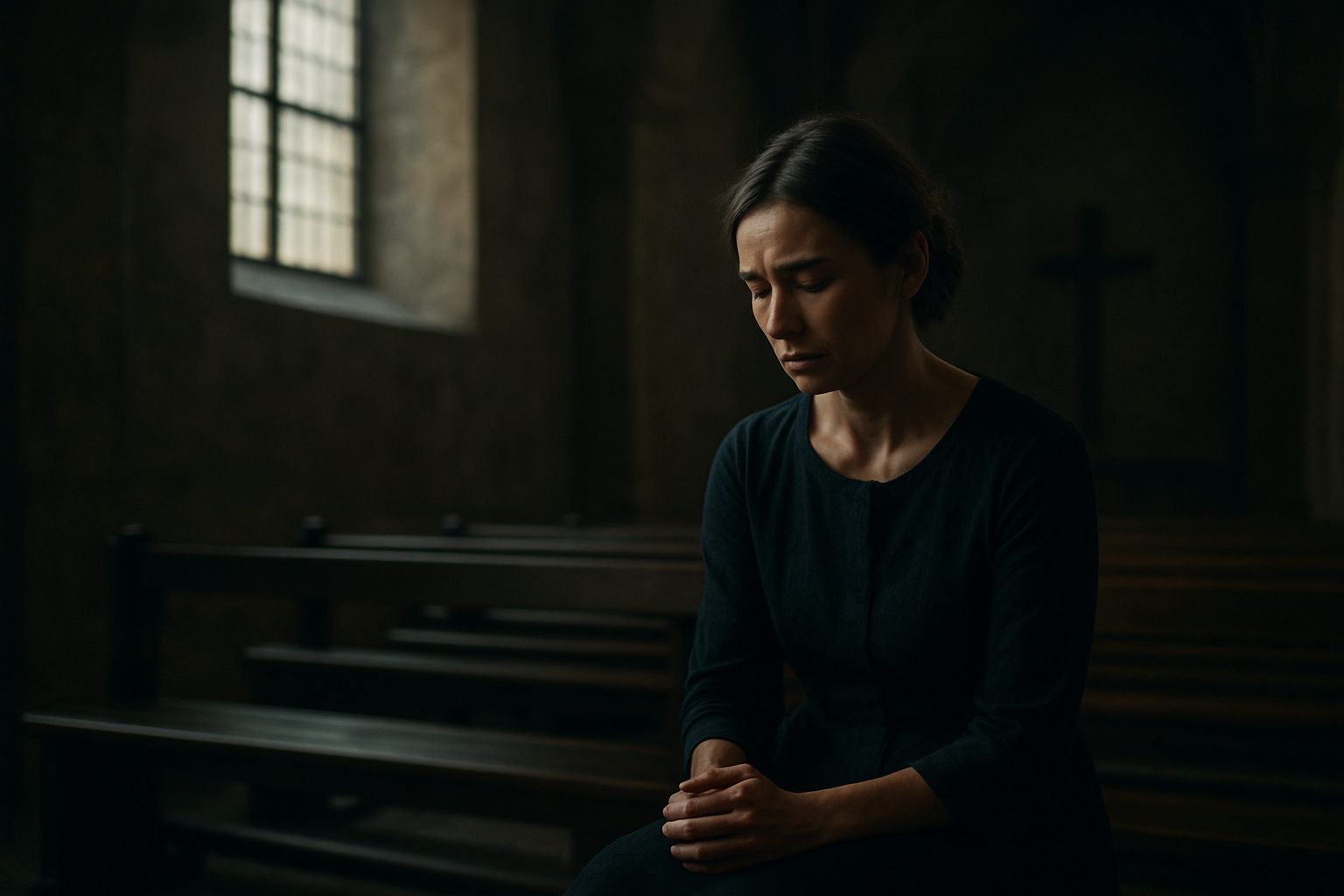
In an increasingly noisy world, silence can often be both a refuge and a source of dread. For many of the faithful, silence is an opportunity for deep spiritual reflection. However, it can also provoke fear, as it forces individuals to confront the unknown or the divine in its purest form. This paradoxical relationship with silence has intrigued theologians, philosophers, and laypeople alike, raising critical questions about faith, fear, and the human psyche.
The Role of Silence in Religious Practices
Silence has been a cornerstone of religious practices across cultures and centuries. From the Christian monastic traditions of silence in meditation to the Buddhist practice of noble silence, stillness is seen as a pathway to connect with the sacred.
- Christianity: In Christianity, silence is often associated with listening to God’s voice. As Mother Teresa famously said, “In the silence of the heart, God speaks.” The discipline of silent prayer and meditation is central to connecting deeply with the divine.
- Islam: While Islam involves verbal prayers, there is also a significant place for contemplation and the introspective silence that allows a believer to ponder and internalize the teachings of the Quran.
- Buddhism: In Buddhism, silence is more than absence of speech. It is celebrated as a discipline that brings one closer to enlightenment, providing introspective clarity that noisy surroundings obstruct.
Psychological Dimensions of Silence
Though intended to be a pathway to divine insight, silence can also unveil the innermost fears and doubts within believers. Psychiatrist and Holocaust survivor Viktor Frankl suggested that silence forces individuals to confront their own existential void, the uncertainties of life, or doubts about their faith.
“What man actually needs is not a tensionless state but rather the striving and struggling for a worthwhile goal, a freely chosen task,” noted Frankl in his seminal work Man’s Search for Meaning.
In silence, believers are often caught in a duality: the spiritual fulfilment they seek is juxtaposed with the unsettling aspects of their inner self. This can open a floodgate to anxieties, questions they might not have addressed in the busyness of everyday life.
The Anxiety of the Divine Encounter
Silence is often where God speaks to the heart, but it is also where doubts manifest most vividly. According to philosopher Søren Kierkegaard, “A man who as a physical being is always turned toward the outside, thinking that his happiness lies outside him, finally turns inward and discovers that the source is within him.” Kierkegaard’s insight reveals that the isolation of silence may lead to introspection, unearthing questions of self-worth and faith that are easier to ignore with constant distraction.
In essence, the fear of silence may stem from the fear of what the experience reveals. This could be an unsettling feeling of inadequacy, guilt for straying from religious tenets, or a profound silence from God that challenges one’s conviction.
Silence as a Tool for Spiritual Growth
Despite its intimidating nature, acknowledging the fear embedded in silence may open new avenues for spiritual and personal growth. Embracing silence requires courage and vulnerability, as theologian Henri Nouwen stated, “Solitude is the furnace of transformation.”
Here are some spiritual benefits of embracing silence:
- Deeper Connection: Engaging with silence can lead to a more profound connection with the divine, offering clarity and closeness that noisy rituals may not.
- Reflective Introspection: Silence can encourage an honest reflection of one’s faith, prompting believers to confront and reconcile their doubts.
- Personal Strength: Battling the anxieties that arise in silence can foster stronger faith and resilience in the face of spiritual and everyday challenges.
Silence is more than the absence of sound; it is a presence—a profound force that holds the power to heal, challenge, and transform. While it can initially foster trepidation among the faithful, it ultimately provides a unique path to deeper spiritual awareness and personal enlightenment.
Conclusion: Embracing the Power of Stillness
Silence, with its dual capacity to instill fear and foster insight, remains pivotal in the journey of faith. As believers confront their fears in silence, they are often rewarded with a renewed sense of purpose and spirituality.
“Learn to get in touch with the silence within yourself, and know that everything in this life has a purpose,” advised Elisabeth Kubler-Ross, emphasizing the transformative power silence holds for those courageous enough to embrace it.
In accepting the stillness, the faithful may discover that the frightening void is instead filled with potential and a profound pathway to understanding both oneself and the divine. Embracing silence might just be the key to unlocking the door to spiritual wisdom and personal peace.