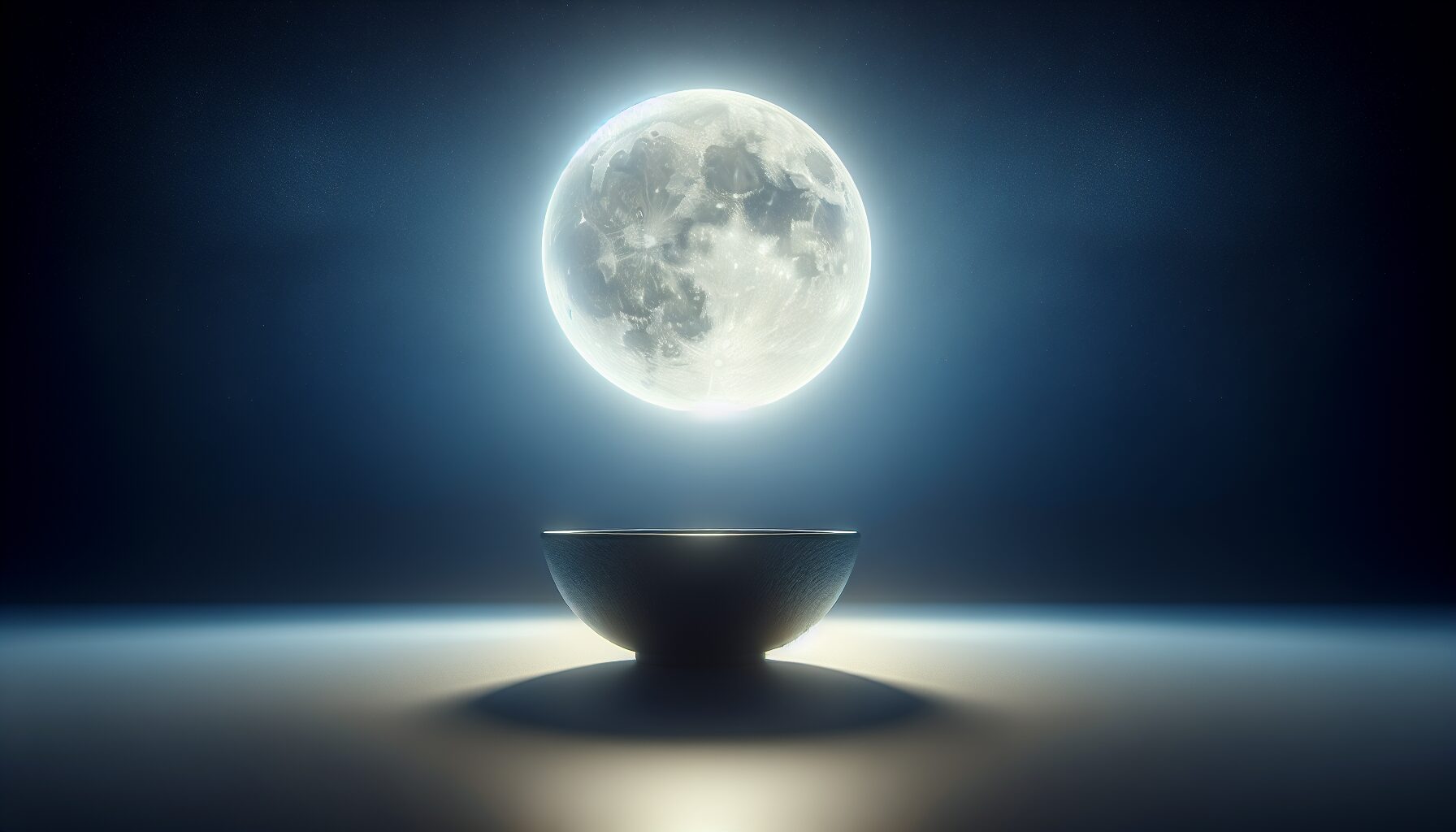
The quest for simplicity has long been celebrated in arts, philosophy, and daily living. From Lao Tzu’s ancient teachings to Thoreau’s reflections on Walden Pond, the drive towards minimalism and a return to elemental ways of being continues to captivate hearts and minds across the world. It is an exploration of how simplicity, much like an empty bowl under a full moon, offers a profound path to grace.
The Philosophy of Simplicity
At the core of many spiritual traditions is the notion that simplicity can lead to a deeper, more meaningful existence. According to Lao Tzu, “I have just three things to teach: simplicity, patience, compassion. These three are your greatest treasures.” His words suggest that simplicity is not merely an absence of complexity but a cultivated treasure.
In the Western world, Henry David Thoreau famously echoed this sentiment, proposing that “Our life is frittered away by detail… simplify, simplify.” Thoreau’s experiment in living simply on the edges of Walden Pond is a seminal exploration of how stripping away excess can illuminate the essential.
Minimalism in Art and Design
Minimalism as an aesthetic emerged in the post-World War II era as artists sought to reduce their work to the most fundamental elements. The call to “do more with less” was not only a reaction to the war’s chaotic aftermath but also a statement on the culture of consumption.
Artists like Donald Judd and Dan Flavin championed this movement, creating works that highlighted space, light, and form over ornamentation. Their installations and sculptures, characterized by precise, geometric shapes and clean lines, invite viewers to engage deeply with the piece’s simplicity.
“Simplicity is the ultimate sophistication.” – Leonardo da Vinci
Living Simply in a Modern World
As people today juggle more responsibilities and information than ever before, the allure of a simpler life grows ever stronger. The minimalist movement has gained traction, advocating for decluttering, mindful consumption, and a balanced lifestyle oriented around what truly matters.
- Mental Clarity: A simplified environment often leads to a clearer headspace. The removal of physical clutter can help reduce mental clutter, allowing focus and creativity to flourish.
- Financial Freedom: By prioritizing needs over wants, living simply can help reduce financial stress and foster greater monetary control.
- Environmental Impact: Simplicity often aligns with sustainable and eco-friendly practices, conserving resources and reducing waste.
Author Alexander Payne says, “By removing clutter, we are left with things of greater consequence, and as such we are able to focus our energy on that which actually matters.”
An Empty Bowl, a Full Life
The image of an empty bowl under a full moon encapsulates the essence of simplicity. The bowl, devoid of contents, is ready to receive, much like an open heart or mind. It is this readiness that allows grace to enter—inviting peace, creativity, and fulfillment.
Rumi, the 13th-century Persian poet, captured this beautifully: “When you let go of who you are, you become who you might be.” The empty bowl represents letting go of the unnecessary to welcome transformative possibilities.
The Path Forward
Grace found through simplicity is not an end, but an ever-evolving journey. It requires reflection, mindfulness, and an embrace of the bare essentials. Whether one finds this grace in minimalist art, a decluttered home, or a disciplined lifestyle, the journey itself is what imbues life with meaning.
As we strive for simplicity amid a bustling world, let the empty bowl beneath the full moon remind us of what is truly important and the boundless potential that comes from leaving space for grace.
“In character, in manner, in style, in all things, the supreme excellence is simplicity.” – Henry Wadsworth Longfellow
True grace, it seems, isn’t found in the abundance of what we possess, but in the elegance of what we cherish.