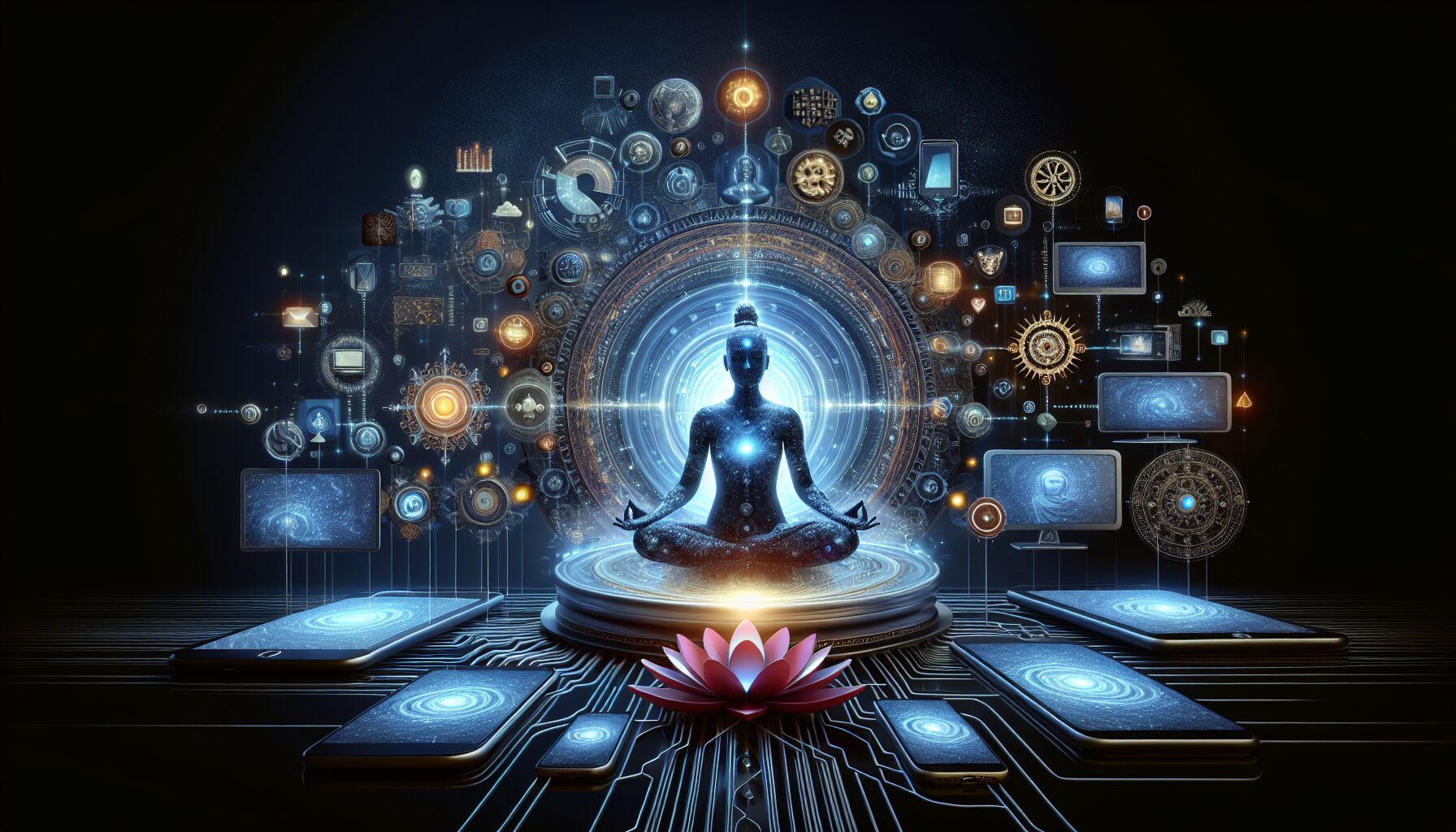
The rapid advancement of digital technologies has transformed the way we live, work, and interact with the world around us. As we are thrust into the Age of Machines, an era characterized by artificial intelligence, machine learning, and ubiquitous connectivity, a pressing question arises: How can we maintain our mindfulness amid this relentless technological progress? The concept of “Digital Dharma” emerges as a beacon for finding inner peace and awareness in an ever-connected universe.
The Intersection of Technology and Mindfulness
Mindfulness, the practice of maintaining awareness of our thoughts, emotions, and environment in the present moment, finds its roots in ancient Eastern traditions. However, its relevance and applicability in the digital age offer new dimensions for exploration and understanding.
“Mindfulness arises when you allow your attention to drop into the body and feel the aliveness inside it,” writes Eckhart Tolle in his seminal work, The Power of Now. His insight provides a critical stepping stone for incorporating mindfulness in our technology-infused lives.
- Notifications: Our devices are designed to capture and hold our attention with constant notifications. Transform these into mindful reminders; each notification serves as an opportunity to pause, breathe, and connect with the present.
- Social Media: Platforms designed to engage can also distract. Practice mindful browsing by setting intentions before logging in and being aware of your emotional responses while navigating feeds.
- Information Overload: With data at our fingertips, practice information moderation. Engage with content that nourishes and supports your mental well-being.
Embracing Technology as a Tool for Mindfulness
While the digital world may appear to be an adversary to mindfulness, it is also fertile ground for cultivating awareness and presence. Adopting a balanced approach can turn technological tools into allies on one’s journey to digital dharma.
Jon Kabat-Zinn, known for his work on mindfulness-based stress reduction, emphasizes, “You can’t stop the waves, but you can learn to surf.” In the digital atmosphere, this means approaching technology mindfully to enhance personal well-being.
- Mindfulness Apps: Tools like Headspace and Calm offer guided meditations and techniques to anchor individuals within the present moment.
- Virtual Reality: VR technology can simulate serene environments that facilitate mindfulness retreats, offering escapism from busy cityscapes.
- Wearable Technology: Devices like the Apple Watch provide breathwork reminders and biofeedback to maintain awareness throughout the day.
The Philosophical Underpinnings of Digital Dharma
Drawing from Buddhism and contemporary philosophical discourse, digital dharma resonates with the concept of being truly present and achieving equilibrium between fast-paced modernity and the tranquility of the mind.
- Interconnectedness: Technology underscores our interconnected world, offering platforms for shared experiences that foster empathy and understanding.
- Impermanence: The transient nature of digital communications echoes the Buddhist principle of impermanence, reminding us to embrace each moment without clinging.
- Intention: Aligning tech usage with conscious intentions transforms potentially distracting tools into mechanisms for self-growth.
Embracing digital dharma ultimately fosters a symbiotic relationship between human consciousness and digital advancement. As Thich Nhat Hanh penned, “In true dialogue, both sides are willing to change.” By engaging in this dialogue, we invite change that supports harmony in personal and collective digital experiences.
Challenges and Opportunities
The journey toward digital dharma isn’t devoid of hurdles. Overcoming these challenges necessitates self-awareness and intentional action:
- Screen Dependency: As technical reliance grows, the allure of constant connectivity can lead to addiction. Setting boundaries on screen time remains critical.
- Data Privacy: Mindfulness includes awareness of our digital shadows. Be cognizant of privacy issues and take proactive steps to safeguard personal information.
- True Presence: Develop the ability to disconnect intentionally and recognize moments that benefit from undistracted human interaction.
Amid challenges lie immense opportunities. Technologies oriented toward enhancing well-being point toward a future where digital tools serve not as distractions, but as enhancements, enriching the human spirit.
The Future of Mindfulness in the Digital Age
The trajectory of digital dharma points toward a future where technology augments emotional intelligence, personal growth, and collective awareness. Nurturing this path demands intentionality and adaptability. Ultimately, the relationship between mindfulness and technology should strive for balance, leading us toward a more harmonious existence.
As Alan Watts succinctly stated, “The art of living is neither careless drifting on the one hand nor fearful clinging to the past on the other.” Navigating digital dharma requires both artful balance and conscious choice, empowering individuals to thrive as mindful beings in an age dominated by machines.