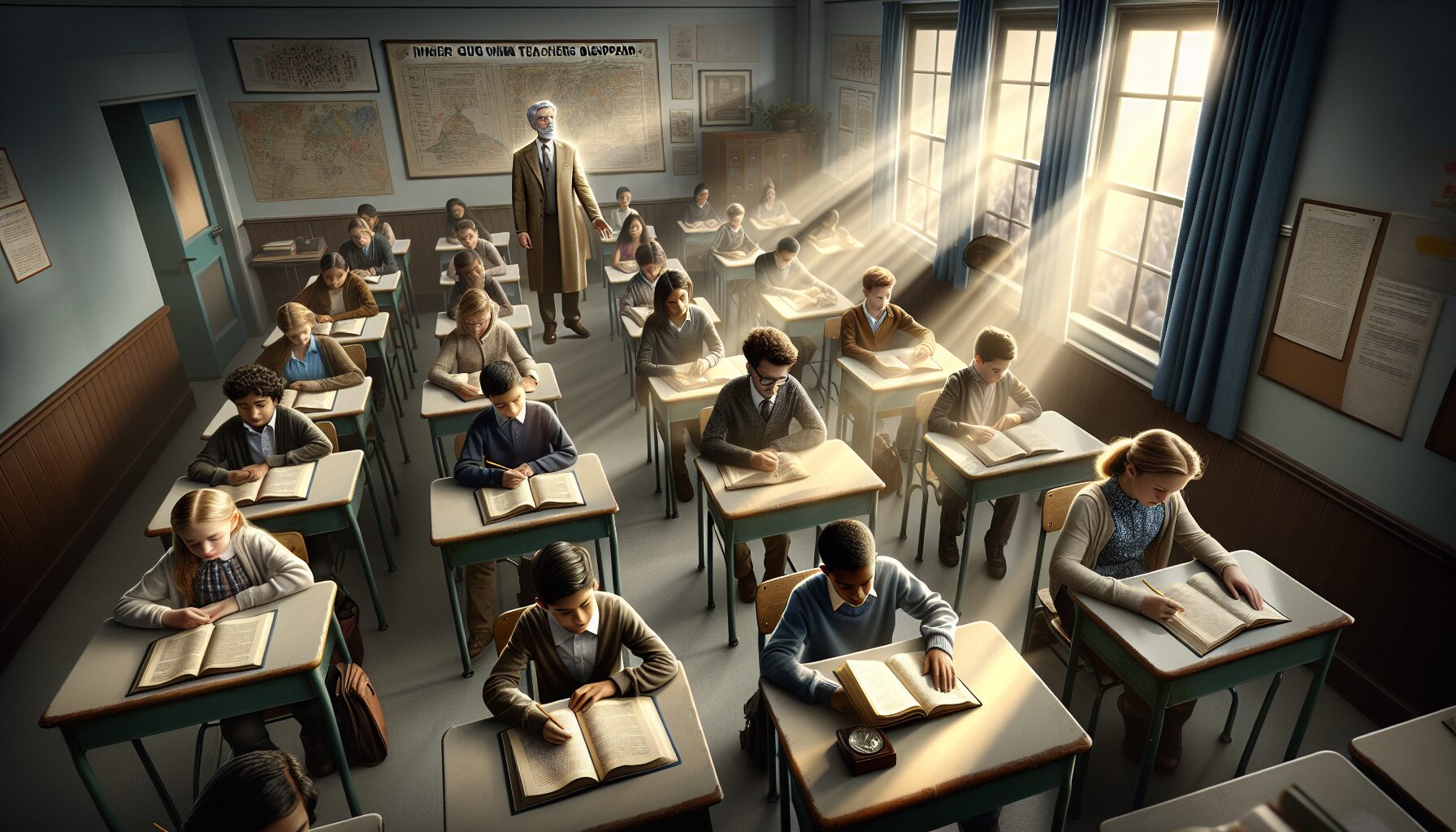
The ancient aphorism goes: “When the student is ready, the teacher will appear.” But what happens when teachers, whether by choice or circumstance, disappear? The journey then transforms, leading students to explore the profound depths of their own inner wisdom. In this article, we delve into how the absence of traditional teachers catalyzes self-discovery, highlighting that sometimes, the true guru lies within.
The Unforeseen Absence
The world of education, from schools to universities, is undergoing unprecedented transformations. Educators, often regarded as pillars of learning, sometimes abruptly leave these environments due to various reasons such as retirement, personal health issues, or even career changes. A report from The Economic Policy Institute noted a significant rise in teacher turnover in recent years, accelerating due to the COVID-19 pandemic.
“Teachers are the compass that activates the magnets of curiosity, knowledge, and wisdom in the pupils.” — Ever Garrison
Yet, the disappearance of teachers often leaves students adrift, challenging them to find new paths of learning and understanding.
Navigating the Void — A Student’s Perspective
For students, the sudden absence of a guiding figure can be disorienting. However, it also presents a unique opportunity for growth. Without teachers, students must engage more deeply with the material, fostering a sense of responsibility and independence. This shift often leads to the discovery of personal strengths and cognitive skills that may have otherwise remained dormant.
- Self-Directed Learning: The absence encourages students to explore resources independently, engaging with books, online courses, and other materials outside the traditional curriculum.
- Critical Thinking: Without a teacher’s direct input, students are challenged to critically assess information, leading to enhanced decision-making skills.
- Innovative Problem-Solving: Facing the gap, students often develop creative solutions and novel approaches to overcoming academic obstacles.
In the words of famed philosopher Jiddu Krishnamurti, “The purpose of education is to prepare the student to invent and discover, to create something new.” Thus, in a paradoxical way, the absence of a teacher might indeed facilitate a deeper, more genuine educational experience tailored to the student’s pace and interests.
The Role of Technology
In these modern times, technology fills part of the educational void. Learning management systems (LMS), online forums, and digital study groups provide platforms for peer-to-peer knowledge exchange, reducing the reliance on a single authoritative figure. Websites like Khan Academy and Coursera offer courses ranging from basic arithmetic to advanced artificial intelligence, available to anyone willing to learn.
However, the integration of technology should complement rather than replace the guidance provided by experienced educators. While technology can disseminate information, it lacks the ability to inspire or emotionally connect, elements which are crucial in a holistic educational journey.
The Inner Guru — Tapping Into Self-Wisdom
Eastern philosophies have long propagated the belief in an inner guru—a well of intuition and wisdom residing within each person. The absence of external teachers can impel students to listen to this inner voice. By cultivating mindfulness and introspection, students can access their innate potential and ingenuity.
Meditation and Reflection: Practices such as meditation enable individuals to break away from the clutter of external voices, focusing instead on internal guidance. Through quiet contemplation, students often gain clarity and insight into both academic and personal challenges.
Journaling: As an introspective tool, journaling helps students reflect on their learning experiences and personal growth. It encourages self-analysis and the articulation of thoughts and feelings, thus fostering a deeper understanding of the self.
Community Learning — From Solitude to Connection
Although self-discovery is intrinsic, community plays a pivotal role in supporting this journey. Peer collaboration can simulate a classroom environment where ideas are exchanged freely, enhancing collective learning. Participation in study groups, clubs, and forums encourages communal growth and allows students to benefit from diverse perspectives.
- Mentorship: Former students or professionals in the field can offer insights and guidance when teachers are unavailable, fostering a supportive ecosystem for learners.
- Peer Teaching: Taking on a teaching role among peers can reinforce one’s own understanding while helping others, creating an enriching cycle of shared knowledge.
As Albert Einstein famously remarked, “Once you stop learning, you start dying.” Thus, the endless pursuit of knowledge, collective or individual, is vital to personal evolution and intellectual vitality.
Conclusion: The Coexistence of External and Internal Teachers
The disappearance of teachers is not a call for their complete eradication from educational ecosystems. Instead, it is indicative of an evolving narrative where both external guidance and inner wisdom coexist to propel individuals towards comprehensive knowledge. The balance of these elements fosters resilience, adaptability, and lifelong learning habits.
Ultimately, when educators go absent, students not only navigate curricula independently but also embark on a journey of self-exploration—one that reveals the true guru always resided within, quietly waiting to be discovered.