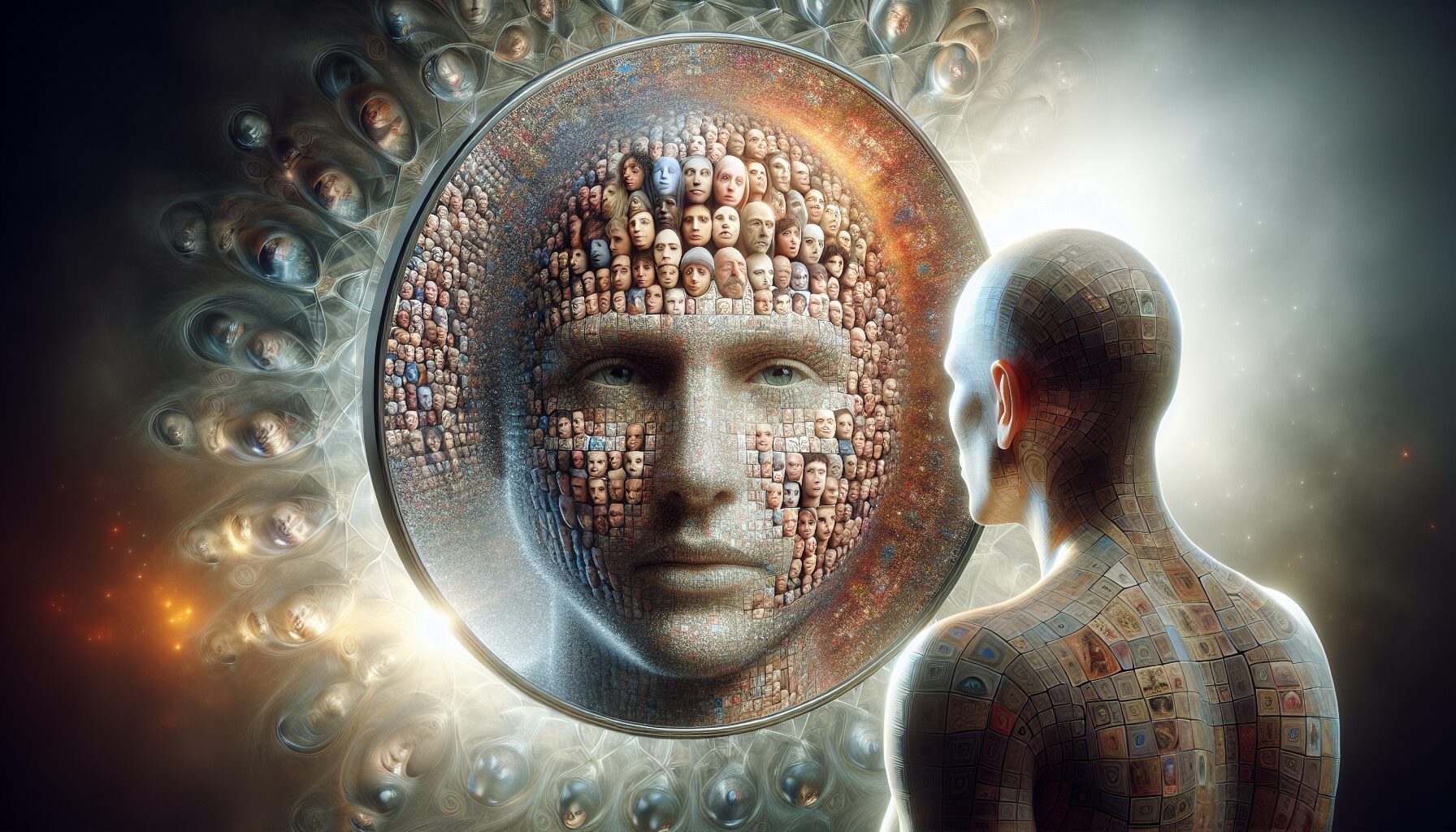
In a world often divided by differences, the quest for recognizing the divine in every being emerges as a crucial spiritual and philosophical pursuit. This vision, one that sees beyond the mirror of our own reflections and into the sacred essence of others, calls for a profound shift in perception and consciousness. It challenges us to transcend superficial judgments and discover the interconnected web of life that binds us all.
The Concept of Divine Unity
The notion of seeing the divine in everyone is not new. It finds its roots in various spiritual and religious traditions around the globe:
- Hinduism: The Vedic scriptures speak of Atman, the divine soul present in every living being. The famous phrase “Tat Tvam Asi” from the Chandogya Upanishad, which translates to “Thou art That,” conveys the essential unity of the individual soul with the universal spirit.
- Christianity: The teachings of Jesus Christ emphasize love and empathy, encapsulated in the commandment to “love thy neighbor as thyself” (Mark 12:31). This teaching suggests a recognition of God’s presence in all people.
- Buddhism: The concept of Buddha-nature suggests that all beings inherently possess the potential to attain enlightenment, inherently carrying a spark of the divine.
Breaking the Illusion of Separation
The challenge of seeing the divine face in all beings lies in overcoming the illusion of separation. Albert Einstein once remarked that “a human being is a part of a whole, called by us ‘Universe,’ a part limited in time and space. He experiences himself, his thoughts and feelings as something separated from the rest—a kind of optical delusion of his consciousness” (source).
“The moment we break these illusions, we can begin to perceive the interconnectedness that binds all of creation.” — Thich Nhat Hanh
Practical Steps to Recognize the Divine in Others
Perhaps the most challenging aspect of this practice is its application in daily life. Here are some practical steps to embrace this vision:
- Practice Mindfulness: By being fully present in the moment, we can see beyond the habitual judgments and engage with others more genuinely.
- Cultivate Compassion: Developing empathy allows us to see the struggles and joys of others as our own, fostering a deeper connection.
- Engage in Self-Reflection: Continuous reflection on our biases and judgments helps in understanding the divine reflection within us and others.
Challenges Along the Path
The path to seeing the divine in all comes with its own set of challenges:
- Judgment and Bias: It’s natural to form judgments; however, recognizing when these judgments arise allows us to challenge and dissolve them.
- Pain and Suffering: Witnessing suffering can often obscure our ability to see the divine. However, understanding that suffering itself is a bond that connects all living beings can offer a new perspective.
Inspirational Stories
Throughout history, there are numerous accounts of individuals who embodied this divine vision:
- Mother Teresa: Known for her unwavering compassion, Mother Teresa once said, “If we have no peace, it is because we have forgotten that we belong to each other.”
- Rumi: The Persian poet and Sufi mystic Rumi wrote extensively about the divine connection in all, saying, “The wound is the place where the Light enters you.”
The Role of Community
Engagement with community provides a fertile ground for this transformation. Shared spiritual practices, discussions, and collective efforts in service help in reinforcing our understanding and vision of the divine face in all beings.
Conclusion: A Vision for the Future
As we move forward in an increasingly interconnected world, fostering a vision that recognizes the divine in each other is not just a spiritual pursuit but a necessity for survival and prosperity. It invites us to cross social, cultural, and personal barriers and embrace every individual as a part of the divine tapestry of life.
In the words of Martin Luther King Jr., “An individual has not started living until he can rise above the narrow confines of his individualistic concerns to the broader concerns of all humanity” (source).
Ultimately, seeing the divine face in all beings encourages a profound transformation—one that starts from within and radiates outwards, nurturing a more empathetic, compassionate, and united world.