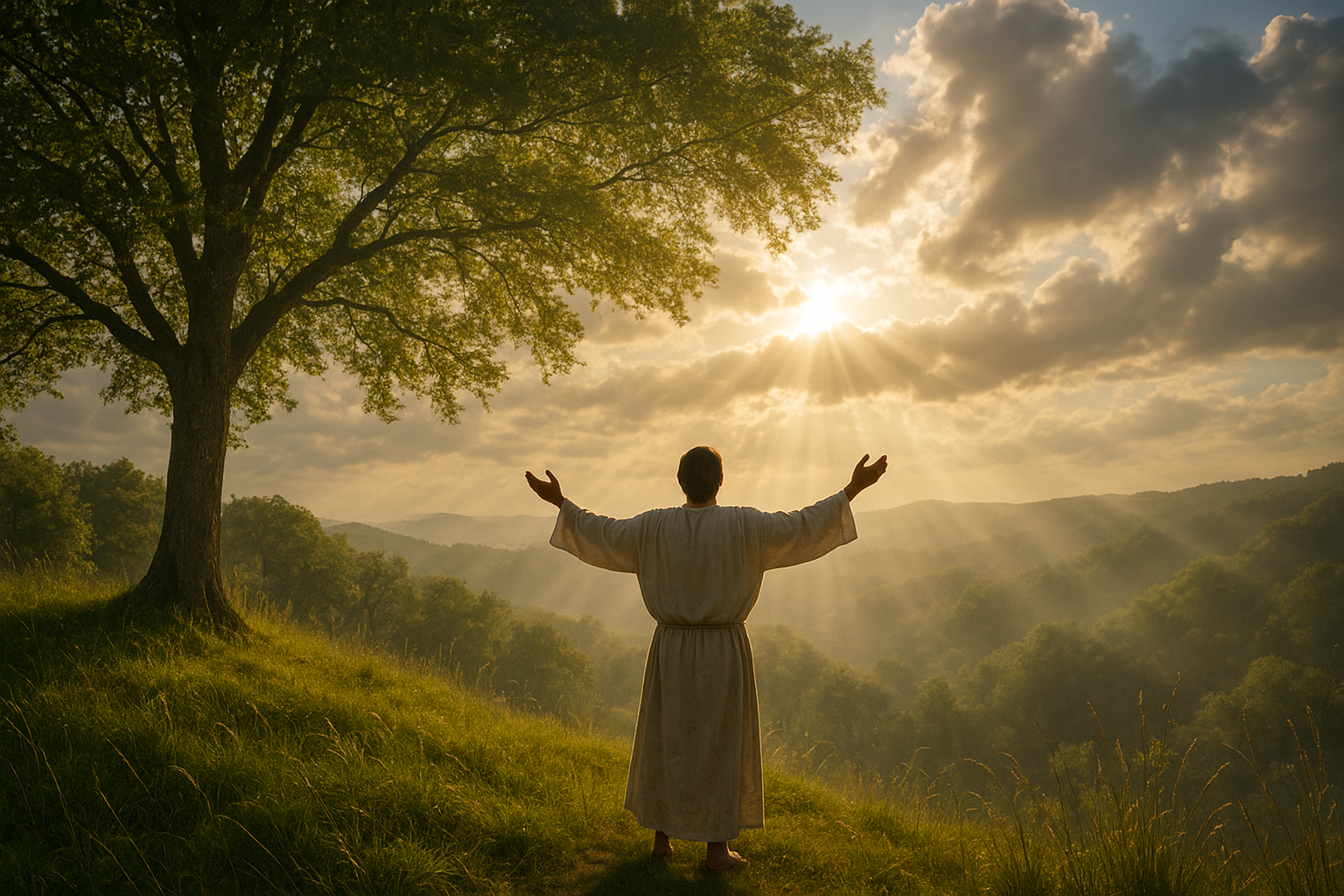
Divine Encounters in Nature: Finding God in the Whispering Winds
Nature has always been a source of inspiration and solace for many people around the world. The grandeur of a mountain range, the serenity of a quiet forest, or the vastness of the ocean can evoke feelings of awe and wonder. For some, these natural settings are more than just beautiful vistas—they are places where they find a connection to the divine.
Throughout history, various cultures and religions have recognized the spiritual significance of nature. From the ancient Greeks, who worshipped gods associated with natural elements, to indigenous peoples who view the environment as sacred, the link between the divine and the natural world is a common thread in human spirituality.
“The clearest way into the Universe is through a forest wilderness.” — John Muir
This article explores how people can experience encounters with the divine through nature, particularly in the subtle phenomena like the whispering winds, and what this connection means for spiritual seekers today.
The Spiritual Significance of Nature
- Historical Perspectives: Historical texts reveal that nature has been revered across various cultures. The Druids, for instance, held trees sacred and believed that forests were infused with spiritual energy. Similarly, many Asian philosophies and religions, such as Taoism, emphasize harmony with the natural world as fundamental to experiencing spiritual enlightenment.
- Religious Teachings: In many religious traditions, nature is seen as a manifestation of divine creation. Christianity, for example, often highlights the beauty and order of the natural world as evidence of God’s handiwork. Genesis 1:31 states, “God saw all that he had made, and it was very good.” This sentiment echoes across many traditions, emphasizing the idea of nature as a reflection of divine will.
Experiencing Divinity in the Whispering Winds
One of the most evocative ways people feel a divine presence is in the gentle whisper of the wind. The wind, often invisible and mysterious, symbolizes the unseen but palpable presence of a greater force. The Old Testament refers to God speaking to Elijah through a gentle whisper, and the Quran describes the natural world, including the winds, as signs for those who reflect.
- Personal Testimonies: Many individuals describe feeling a sense of peace and connection during moments when a breeze touches their face or when they hear the rustling leaves. These experiences are often marked by a profound sense of oneness with the world and an overwhelming presence of comfort and reassurance.
- Scientific Perspectives: While science primarily focuses on physical phenomena, the psychological impact of nature is well-documented. Studies have shown that spending time in natural settings can reduce stress, increase feelings of well-being, and even inspire creativity, which some interpret as divine inspiration.
The Role of Nature in Contemporary Spiritual Practices
In today’s fast-paced world, many people seek to reconnect with the natural world as a means to find balance and spiritual fulfillment. Organized religion and personal spirituality alike encourage believers to seek out divine experiences in nature.
- Nature Retreats and Pilgrimages: Spiritual retreats in natural settings aim to provide participants with the chance to disconnect from everyday distractions and focus on inner reflection and communion with the divine. Pilgrimages to sites of natural beauty or cultural significance, such as the Camino de Santiago, further highlight the importance of nature in contemporary spiritual practices.
- Environmental Stewardship: For many, finding divinity in nature also calls for a commitment to protecting the environment. This sense of stewardship arises from the belief that nature is a sacred gift that must be preserved for future generations.
Theological Reflections
Theologically, the idea that God might be found in nature challenges and enriches traditional concepts of divine transcendence and immanence. Immanence refers to the belief that God is present and active within creation, while transcendence emphasizes God’s existence beyond and independent of the material universe.
Nature, therefore, can be seen as a sacrament—a tangible sign of an unseen reality. According to theologian Sallie McFague, in her book The Body of God: An Ecological Theology, “The world is where we meet God, where God is revealed and where God acts.”
“Nature is the art of God.” — Dante Alighieri
Conclusion: The Divine Invitation
Ultimately, discovering the divine in nature is a deeply personal journey. It encourages individuals to step outside the confines of man-made structures and materially-driven lives to find solace and wisdom in the quiet places of the world. Whether it is found in the whispering winds, the glow of a sunset, or the expanse of the night sky, the divine invitation remains open to all who seek it.
To explore more about how nature intertwines with spiritual practices, visit Spirituality and Practice. This resource provides insights and stories on how nature and spirituality have formed a profound relationship throughout human history.
In engaging with nature, one might just find, as many before have, that the divine is ever-present, inviting, and ready to whisper through the winds into our hearts.