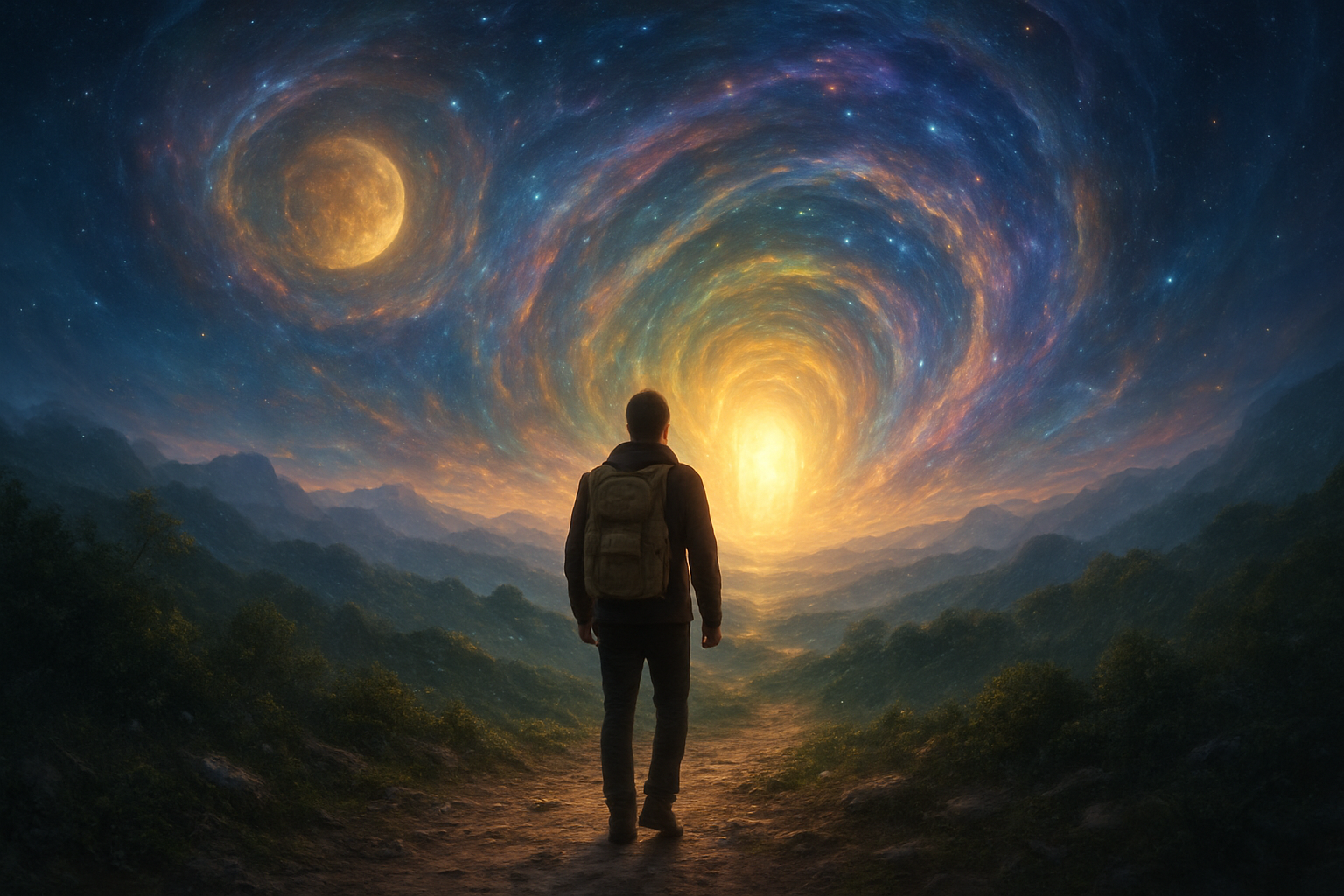
Traveling the Spiritual Map: Exploring Realms Beyond the Physical
In a world where material pursuits often take center stage, the exploration of the inner realms of consciousness remains an enticing and profound journey. Understanding the spiritual map—an abstract concept that guides individuals through experiences beyond the physical plane—requires openness to the mystical and the metaphysical.
The Foundation: What Is a Spiritual Map?
A spiritual map serves as a metaphorical guide for navigating the diverse realms of human consciousness. It encompasses varied paths and philosophies aimed at enlightenment, self-awareness, and transcendence. This concept, though abstract, is deeply rooted in the teachings of ancient traditions and modern spiritual practices alike.
“Traveling the path to spiritual enlightenment does not mean an end to the journey, but rather the beginning of seeing the journey itself as the destination.”
— Eckhart Tolle, “The Power of Now”
The spiritual map is non-linear, often described with terms like chakras, aura, and cosmic consciousness. It is neither defined by geographical borders nor by cultural limitations but is instead an integration of consciousness expansion techniques from every corner of the globe.
Exploring the Layers of Human Consciousness
To effectively traverse this map, one must dive into the layers of consciousness, which can be categorized broadly into three realms: the conscious, the subconscious, and the superconscious.
- Conscious Mind: This is the realm of awareness where thoughts, perceptions, and sensations occur. It’s the surface of the spiritual map, the visible layer through which we operate in the mundane world.
- Subconscious Mind: Often depicted as the realm of dreams and long-buried memories, the subconscious is a deeper layer accessed through meditation, hypnosis, or the spontaneous nightly visions of dreams.
- Superconscious Mind: Also referred to as higher consciousness, this layer embodies spiritual intuition and universal love, often associated with experiences of enlightenment and bliss.
Paths of Spiritual Exploration
There are numerous methods and practices one can pursue to map the spiritual landscape. Each path offers its own unique way of accessing the inner realms and is often deeply personal.
Meditation and Mindfulness
Meditation serves as one of the oldest and most reliable vehicles for spiritual exploration, providing a gateway to deeper states of consciousness and the divine. Jon Kabat-Zinn, a pioneer of mindfulness meditation, suggests that “Meditation is not evasion; it is a serene encounter with reality.”
Through meditation, individuals often encounter profound insights, tapping into the troves of wisdom and peace nestled within their being. Mindfulness—the art of being fully present—acts as both the starting point and the path itself on this journey.
Vision Quests and Shamanic Journeys
Vision quests and shamanic journeys are ancient practices rooted in indigenous cultures. They involve solitary experiences in nature, fasting, and ritualistic practices designed to bring one into contact with the spirit world.
In these altered states of consciousness, individuals may encounter spirit guides and receive powerful visions that alter their understanding of both themselves and the universe around them. “The world is full of magic things, patiently waiting for our senses to grow sharper.” — W.B. Yeats
Yoga and Tantric Practices
Yoga is more than a physical exercise; it’s traditionally a path to spiritual realization. It incorporates physical postures, breath work, and meditation to align mind, body, and spirit.
Tantric practices extend this harmony, delving deeper into the unity of creation and consciousness and often misunderstood as purely sensual, but fundamentally focused on the transcendence of duality.
Philosophical Studies and Contemplation
Diving into the sacred texts of various spiritual traditions offers profound insights. From the Hindu Upanishads and the Buddhist Sutras to the Christian Gospels and the Islamic Qur’an, these texts offer guidance and ethical frameworks for spiritual seekers.
Philosophical contemplation—whether through reading, writing, or thought experiments—allows individuals to integrate knowledge and reflect on life’s quintessential questions.
Conclusion: Mapping the Journey Within
Traveling the spiritual map is not about reaching a final destination but about exploring the uncharted territories of the soul. Each journey is unique, reflecting the personal growth and transformation of the individual traveler.
The key lies in maintaining an open heart and mind, remaining receptive to the guidance and wisdom that emerges from the depths of one’s own being. As ancient sages have long asserted, and as modern seekers continue to discover, the journey inward is one that eternally beckons, promising revelations far richer than anything found in the material world.
By embracing the spiritual map, one does not merely traverse a path but becomes a living testament to the boundless potential of human consciousness. Thus, we end with the eternal echo of the heart’s quest: Who are we, really, if not beings of infinite journey?