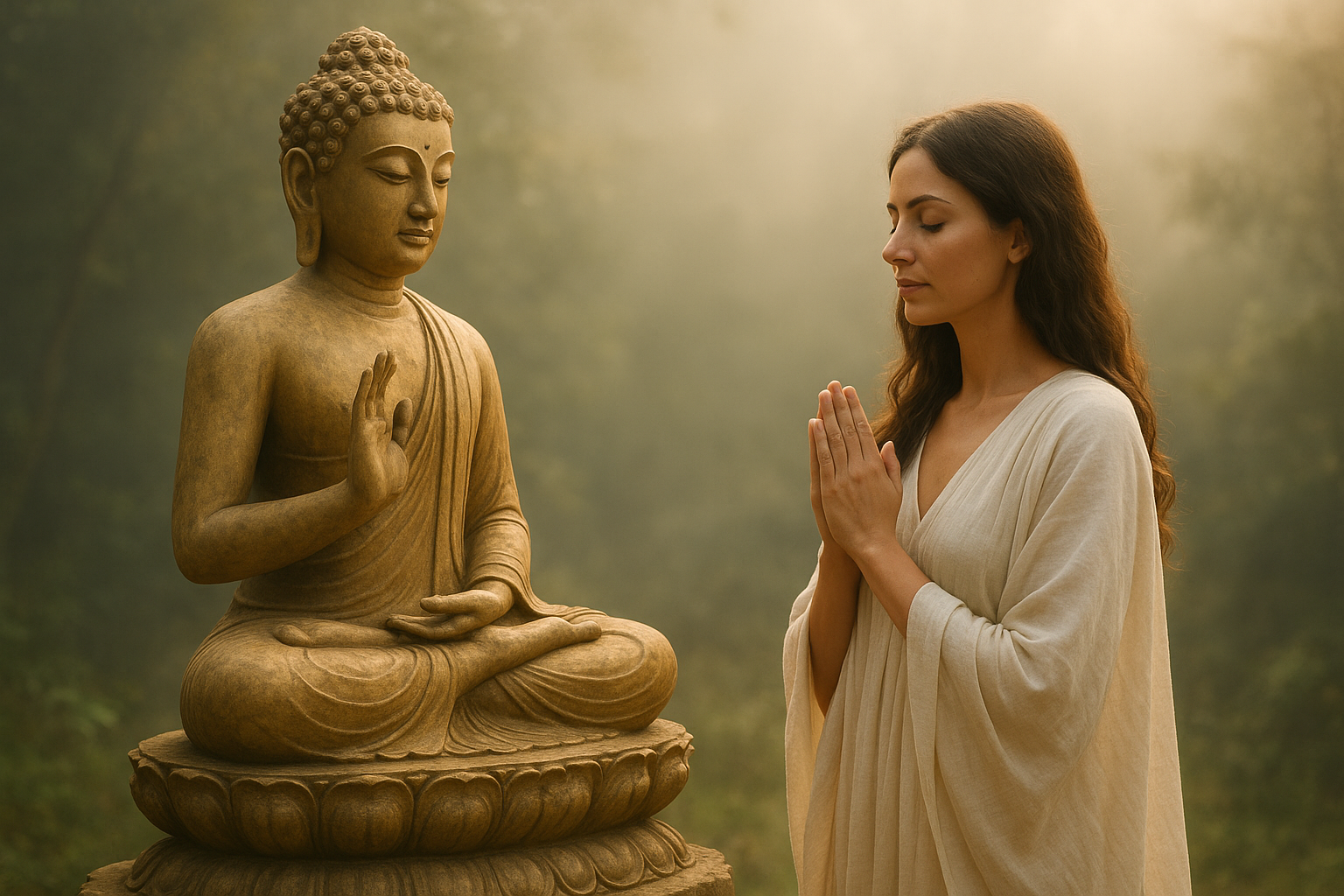
In an increasingly interconnected world where spiritual practices often intersect, the blending of Buddhism and Christianity presents a fascinating tapestry of calm and divinity. While they originate from different cultural and historical backgrounds, both religions provide profound insights and practices that can enrich each other. This article explores how the tenets of Buddhist calm can harmoniously blend with the Christian ideal of divine love to create a unique spiritual journey.
The Quiet Serenity of Buddhism
Buddhism, with its roots stretching nearly 2,500 years back to Siddhartha Gautama, emphasizes mindfulness, compassion, and the cultivation of inner peace. At its core is the pursuit of nirvana, a state free from suffering and individual desires. The Buddha taught the practice of mindfulness meditation as a way to achieve a deep sense of calm and equanimity.
“The root of suffering is attachment.” – Buddha
- Mindfulness: A practice involving a deep awareness of the present moment, free from judgment, allowing one to observe thoughts and emotions as they are.
- Compassion: Extending kindness and empathy to all creatures, recognizing the interconnectedness of all life.
- Equanimity: A mental state of stability and balance, undisturbed by emotion.
These principles foster a serene heart, open to love and understanding, which is remarkably aligned with Christian teachings.
The Profound Essence of Divine Love
Christianity, with its emphasis on love and grace, calls followers to embody the love of God towards one’s neighbor. The Bible encapsulates the two greatest commandments as loving God and loving others (Mark 12:30-31).
“Love is patient, love is kind. It does not envy, it does not boast, it is not proud.” – 1 Corinthians 13:4
- Agape Love: Selfless, unconditional love which is at the heart of Jesus’ teachings.
- Grace: The unearned favor and mercy of God that encourages believers to forgive and embrace others.
In Christianity, divine love is not merely an emotional state but an active, transformative force that redeems and heals.
Finding the Intersection: Buddhist Calm Meets Divine Love
At first glance, Buddhism and Christianity appear to be parallel paths in spiritual practice. However, the beauty lies in their intersections:
- Calmness in Action: Buddhist meditation practices can enhance a Christian’s ability to remain centered and peaceful, amplifying the capacity to love unconditionally as Jesus taught.
- Compassionate Love: The Buddhist emphasis on compassion can inform Christian interpretations of divine love, enriching the depth and breadth of spiritual engagement.
As Thich Nhat Hanh, a revered Buddhist monk known for his interfaith dialogues, succinctly put it, “We need only to understand the teachings of Jesus and the practice of Buddhism in order to realize they are one.” This sentiment underscores the potential for a spiritual synthesis that respects both traditions while fostering a greater openness and integration in their practices.
Case Studies and Personal Journeys
Across the globe, individuals embark on personal journeys that blend these paths, creating unique expressions of faith and spirituality:
- Christian Monks Practicing Zen: In the Trappist order, Christian monks have incorporated Zen meditation into their routines, seeking to combine deep tranquility with Christian contemplation.
- Buddhist-Christian Retreats: Interfaith retreats provide spaces where practitioners of both faiths can explore meditation, prayer, and dialogue, nurturing personal growth and understanding.
- Personal Testimonies: Many practitioners share compelling stories of how adopting elements from Buddhism has deepened their Christian faith, leading to greater peace and love in their lives.
A Path Forward
The fusion of Buddhist calm with divine love suggests a path toward a profound spiritual realization. By embracing both mindfulness and selfless love, individuals can cultivate a balanced and harmonious spiritual life. This blending does not dilute the essence of either tradition but rather enriches them, offering a holistic approach to spirituality.
As the global spiritual landscape evolves, the blending of these distinct yet complementary philosophies can guide individuals toward a richer, more profound connection with themselves, others, and the divine.
Conclusion
Mystical journeys in faith offer a path of self-discovery and spiritual integration. By blending the serenity of Buddhism with the unconditional love championed in Christianity, a transformative spiritual experience awaits. This synthesis invites both traditions to flourish together, nurturing a world that celebrates diversity and seeks unity through the shared goal of peace and love.