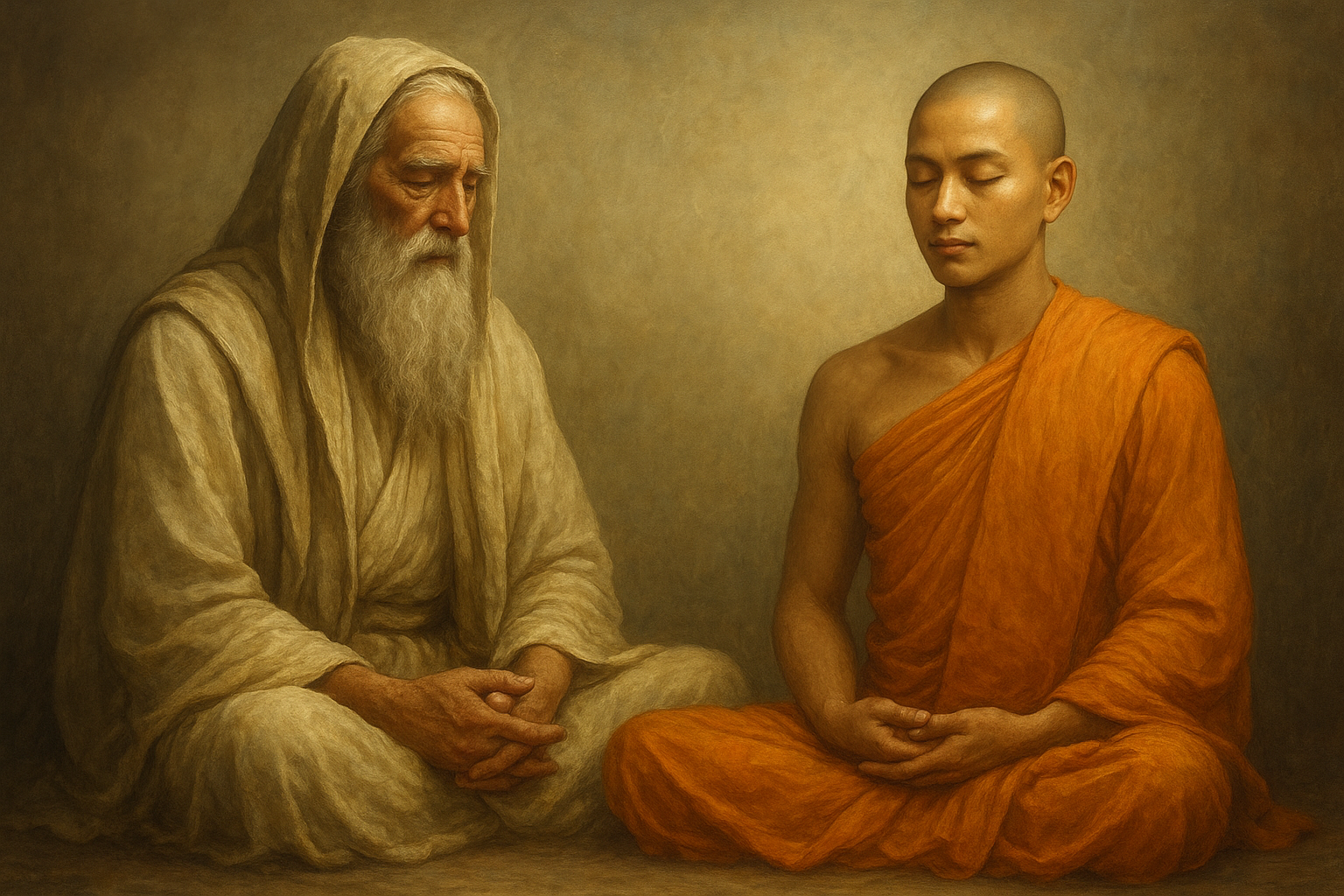
Mystical Unions of Traditions: Abrahamic Depth with Buddhist Flow
The collision of worldviews and spiritual systems has been an ongoing human endeavor, especially when it comes to blending profound religious traditions. Among the most intriguing of these unions is that of Abrahamic traditions—Judaism, Christianity, and Islam—with the fluid philosophies of Buddhism. In this exploration, we identify not only points of intersection but also the unique contributions each tradition brings to the spiritual table.
Roots of Abrahamic Mysticism
Abrahamic religions are defined by their monotheistic belief, sacred texts, and linear historical perspective. Mysticism within these traditions takes various forms, including the Kabbalah in Judaism, Christian mysticism, and Sufism in Islam.
- Kabbalistic Insights: The Jewish Kabbalah focuses on understanding the divine nature’s hidden aspects through esoteric knowledge. Lawrence Kushner, a prominent scholar, notes,
“Kabbalists believe that each letter of the Torah contains divine secrets and that the complex arrangement of these letters provides keys to heavenly wisdom.”
- Christian Mysticism: Christian mystics seek a personal experience of God, often emphasizing love and union with the divine. Thomas Merton, an acclaimed Christian mystic, stated,
“Mysticism reposes upon an abundant sense of life and of man’s own potentialities for action.”
(On Being).
- Sufism: Islamic mysticism, or Sufism, involves a direct and personal experience with God, often described through poetry and music. Jalal ad-Din Rumi, a revered Sufi poet, wrote,
“The wound is the place where the Light enters you.”
(Khamush).
The Fluidity of Buddhist Philosophy
Buddhism offers a flexible and non-theistic approach to spirituality, focusing on personal experience and insight as the path to enlightenment. Central to Buddhism are the ideas of impermanence, no-self, and interconnection.
Buddha himself taught, “All that we are is the result of what we have thought; it is founded on our thoughts, it is made up of our thoughts.” (Pali Tipitaka).
Points of Intersection
At first glance, the structured doctrines of Abrahamic mysticism may seem at odds with the free-flowing tenets of Buddhism. However, there are compelling points of convergence:
- Focus on Transformation: All traditions emphasize personal and spiritual transformation. Sufi rituals, Kabbalistic meditations, and Christian contemplative practices parallel the meditative disciplines of Buddhism.
- Emphasis on Compassion: The Buddhist ideal of karuna (compassion) resonates deeply with the Abrahamic focus on love and service. The Dalai Lama has famously noted,
“My religion is very simple. My religion is kindness.”
(Dalai Lama).
- The Quest for Unity: Both mysticism and Buddhism view life’s ultimate goal as unity—with God in the former and with the universal flow in the latter.
Benefits of Integration
Combining these rich traditions offers both spiritual depth and pragmatic benefits:
- Enhanced Spiritual Practice: Integrating Abrahamic discipline with Buddhist meditation enriches personal devotion, providing a holistic pathway to transcendence.
- Cultural and Spiritual Understanding: This fusion promotes interfaith dialogue and understanding, fostering a global community rooted in diverse convictions.
- Practical Wisdom: Both traditions offer insights that are applicable in everyday life—be it the Christian ethic of love, the Buddhist path of mindfulness, or the Sufi embrace of the ecstatic.
Challenges and Considerations
Interwoven threads of these spiritual systems are not without their challenges:
- Doctrinal Differences: Integration requires careful navigation of theological differences, as both traditions have foundational doctrines that may not easily align.
- Cultural Appropriation: Respectful incorporation is key. Practitioners must remain mindful to honor the unique origins and sacred practices of each tradition.
Conclusion
Moving between the sacred texts and meditative silence, the union of Abrahamic mysticism and Buddhist flow provides a unique palette for personal exploration and universal connection. As spiritual seekers embark on this path, they cultivate a rich garden where seemingly disparate blossoms come to represent a unified tapestry of human spiritual endeavor. By respecting and understanding their complexities, one can hope to create a more interconnected, peaceful world.