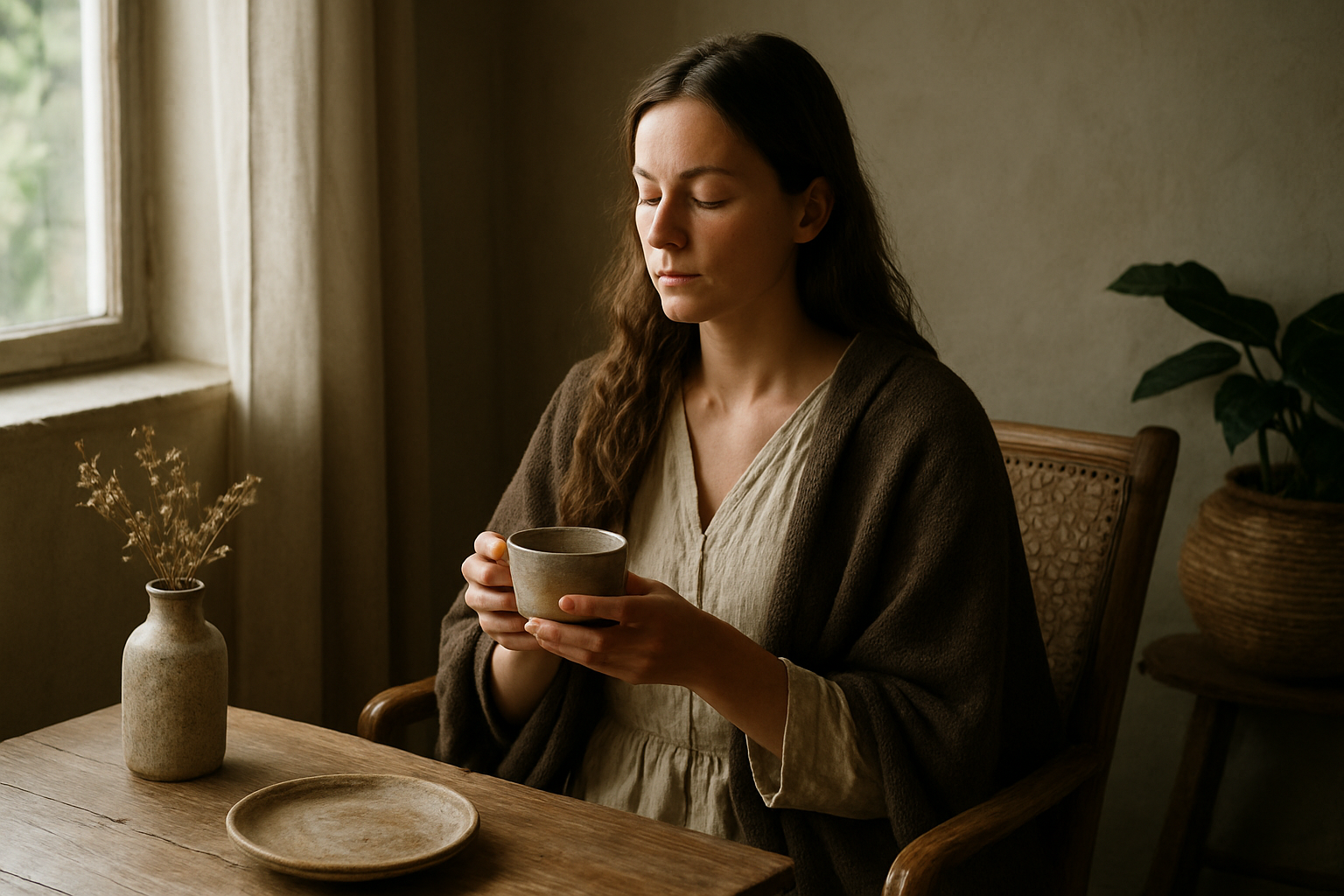
Slow Living as Sacred Resistance: Faith against Acceleration
In an age where speed and productivity are lauded as the ultimate virtues, the concept of ‘slow living’ emerges not just as a lifestyle choice but as a profound form of sacred resistance. This idea challenges the relentless pace of modern life by advocating for a more deliberate, intentional, and reflective way of living. By doing so, it aligns closely with various faith traditions that emphasize contemplation, presence, and the sanctity of time.
The Acceleration of Modern Life
The accelerated pace of contemporary life is a byproduct of technological advancement and the global capitalist economy. As Hartmut Rosa, a German sociologist and proponent of social acceleration theory, explains, “the speed of life increases through the synchronization of our actions and the speeding up of our daily routines.”
“Acceleration is a way of life now in modern society. We consume more and faster; we expect everything to be instantaneous, from communication to gratification.” — Hartmut Rosa
This phenomenon leads to a pervasive sense of alienation, as individuals feel increasingly detached from their work, communities, and even themselves. Enter ‘slow living,’ which seeks to counterbalance this thrust toward acceleration.
Understanding Slow Living
At its core, slow living is about prioritizing quality over quantity and being fully present in the moment. It encourages individuals to engage deeply with their surroundings and personal relationships, cultivating a life enriched by meaning and connection. This lifestyle is not about moving at a snail’s pace, but about finding a sustainable speed that allows for a balanced life.
The slow living movement intersects significantly with various religious and spiritual traditions. It shares common ground with concepts such as the Sabbath in Judaism, an intentional day of rest and reflection, and the Christian practice of quiet time or meditation.
Faith Traditions and the Call to Slow Down
Judaism: The Sanctity of the Sabbath
The concept of the Sabbath is central to Jewish thought, providing a weekly reminder of the importance of rest and spiritual reflection. The Sabbath is a sacred time that is set apart from the busyness of daily life, dedicated to family, faith, and rest.
“Six days you shall labor and do all your work, but the seventh day is a Sabbath to the Lord your God. On it you shall not do any work.” — Exodus 20:9-10
The Sabbath, as a traditional form of slow living, offers a rhythm to life that combats the constant demand for productivity. By embracing this sacred pause, adherents find spiritual rejuvenation and deeper connections with their faith and community.
Christianity: The Path of Contemplation
In Christianity, the notion of slowing down is often tied to the practices of contemplation and prayer. These practices are seen as pathways to divine connection and spiritual growth. The writings of Christian mystics such as Thomas Merton highlight the importance of slowing down to hear God’s voice amid the clamor of the world.
“There is a pervasive form of contemporary violence… [and] it is activism and overwork… To allow oneself to be carried away by a multitude of conflicting concerns, to surrender to too many demands, to commit oneself to too many projects, to want to help everyone in everything, is to succumb to violence.” — Thomas Merton
Merton’s reflection emphasizes that a frenzied pace not only harms the individual but is a form of self-inflicted violence that separates one from the divine.
Buddhism: Mindfulness in Every Moment
Buddhism offers the practice of mindfulness as a way to cultivate slow living. By being fully present in each moment, practitioners can cultivate peace and clarity, counteracting the stress and anxiety that accompany a hectic life.
“The present moment is the only time over which we have dominion.” — Thich Nhat Hanh
This mindfulness practice aligns with slow living by encouraging individuals to savor each experience, fostering a deeper appreciation for life in all its intricacies.
The Resistance and Spiritual Discipline of Slow Living
Slow living as sacred resistance involves adopting intentional spiritual disciplines that create space for reflection and growth. These practices, drawn from various faith traditions, include:
- Sabbath Observance: Setting aside dedicated time each week for rest and reflection, as seen in Judaism.
- Contemplative Prayer: Engaging in periods of quiet contemplation to deepen spiritual understanding, a common practice in Christianity.
- Mindful Meditation: Practicing mindfulness to increase awareness of the present moment, as encouraged in Buddhism.
- Simple Living: Reducing attachment to material possessions to focus on what truly matters.
- Community Engagement: Building deeper, meaningful relationships with others through shared intentional practices.
These disciplines serve to ground individuals amid the chaos of modern life, forging a path that is counter-cultural but spiritually enriching.
Concluding Thoughts: A Sacred Journey
Adopting slow living as a form of sacred resistance is not an easy undertaking in a world that prioritizes speed and efficiency. However, it offers a pathway to a more meaningful, connected, and spiritually fulfilling life. It challenges the status quo by asserting that there is inherent worth in idleness, reflection, and slow-paced living.
Faith traditions have long understood and advocated for the virtues of slowing down, and in contemporary times, these traditions provide a crucial framework for resisting the haste that dominates modern culture. By embracing slow living, individuals can cultivate a sacred resistance that nourishes the soul and honors the divine essence of life itself.
“In the rush and noise of life, as you have intervals, step within yourselves and be still. Wait upon God and feel His good presence; this will carry you evenly through your day’s business.” — William Penn
As more people become disillusioned with the demands of a fast-paced existence, the movement toward slow living offers a sanctuary of peace and an invitation to rediscover the sacred in the everyday.