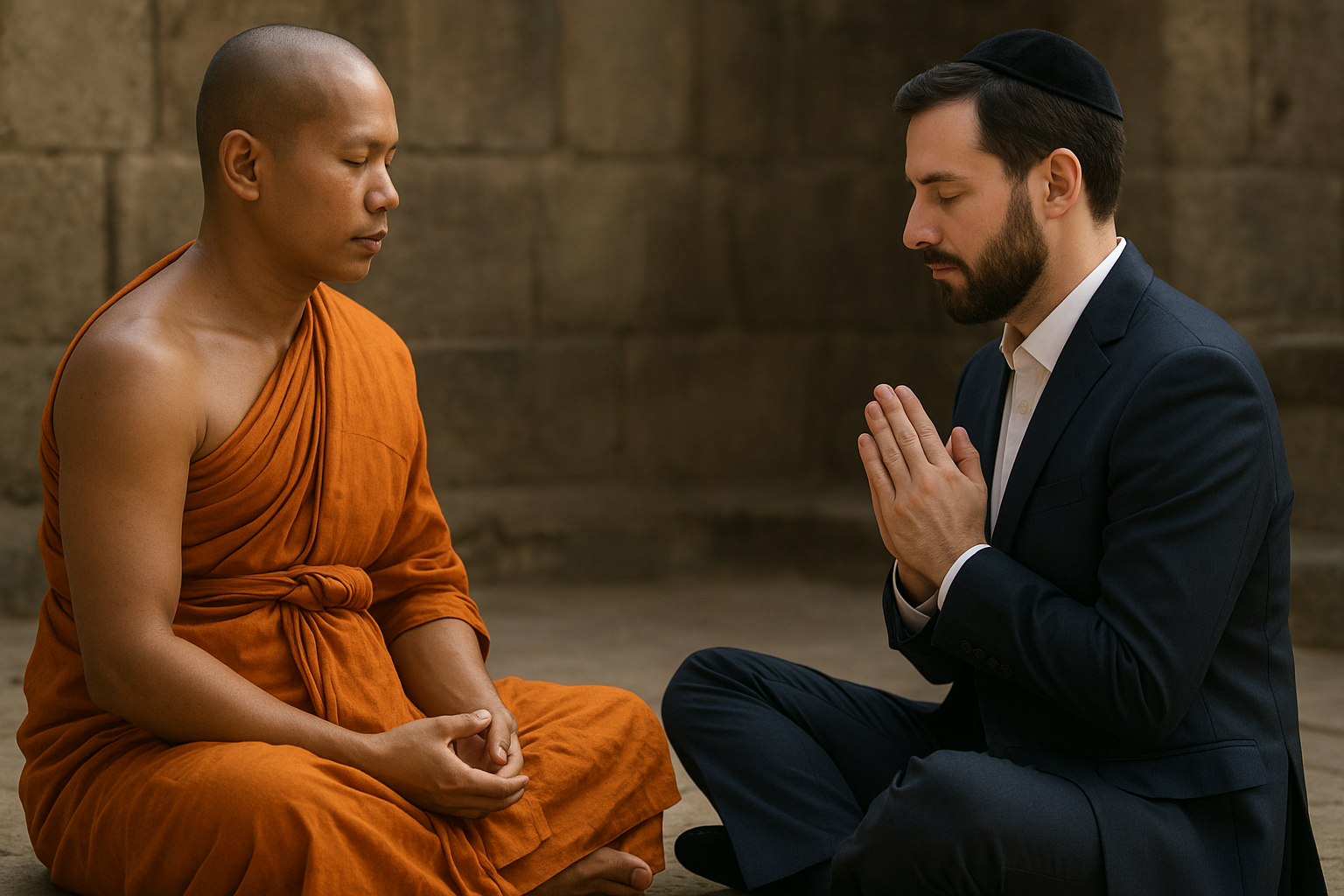
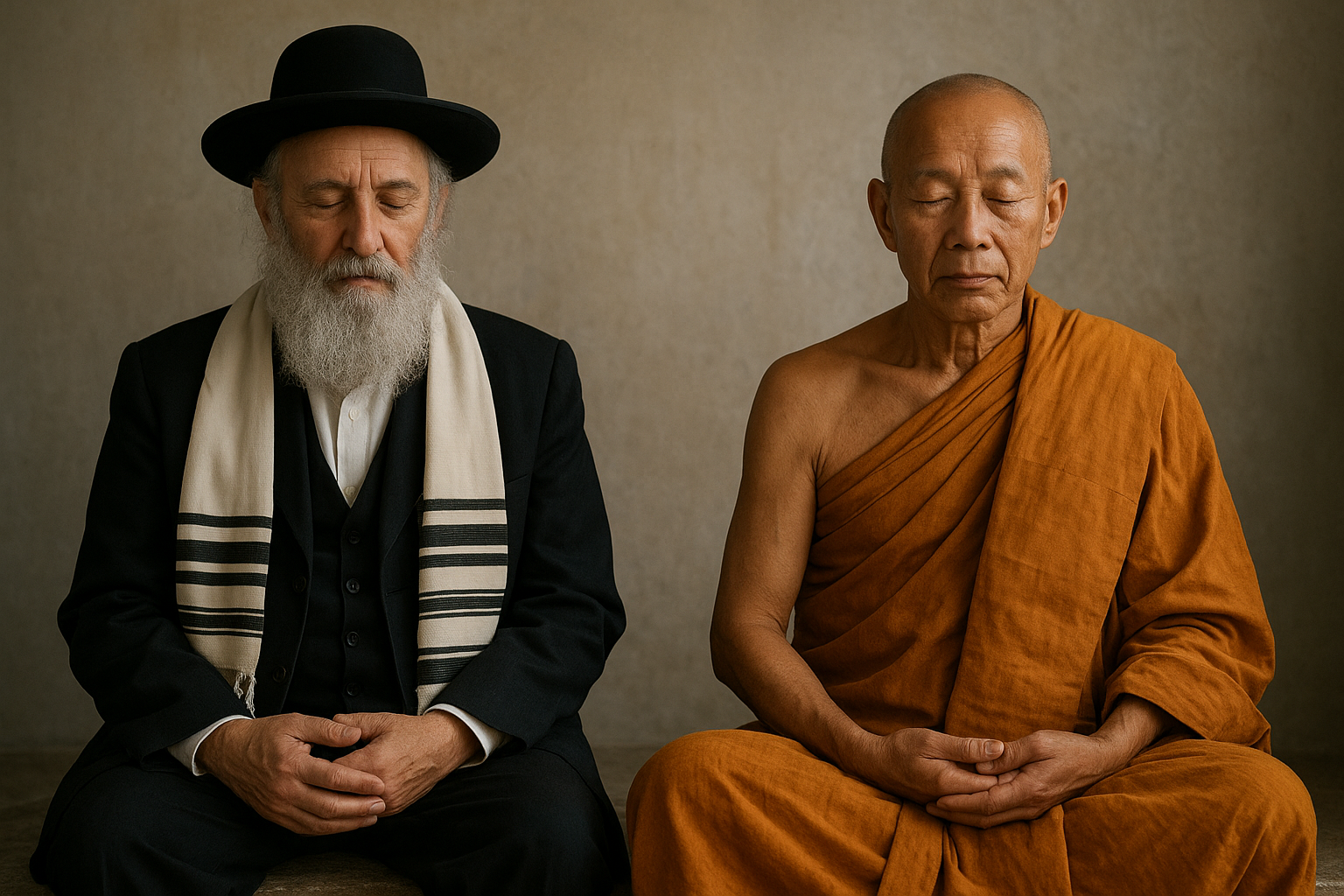
The pursuit of eternal peace has been a universal quest throughout human history. While religions offer diverse pathways, there is a growing interest in integrating Buddhist practices within Abrahamic contexts to achieve spiritual harmony and inner tranquility. This blend not only promotes interfaith harmony but also enriches spiritual practices across different traditions.
Mindfulness and Meditation
One of the key contributions of Buddhism is the practice of mindfulness. Originating from Buddhist traditions, mindfulness involves paying full attention to the present moment without judgment. It’s a practice that has found common ground in Abrahamic traditions, where it complements prayer and contemplation.
“Mindfulness goes beyond meditation, it’s about cultivating awareness in every action and thought. When integrated with prayer, it enhances the spiritual experience,” says Dr. Sarah Ali, a theologian at the University of Chicago.
In Christianity, meditative practices akin to mindfulness have been seen in the contemplative traditions, such as those influenced by the works of Thomas Merton. Similarly, within Islam, the practice of dhikr (remembrance of God) parallels the mindfulness approach, focusing on the conscious acknowledgment of God’s presence.
Compassion Practices
Compassionate action is another common theme in both Buddhist and Abrahamic religions. The Buddhist practice of metta (loving-kindness) meditation can be mirrored in the Christian emphasis on love for one’s neighbor, or the Islamic value of compassion in the form of charity (zakat).
Buddhism: Metta encourages the development of unconditional love towards all beings.
Christianity: Emphasizes love as the greatest virtue, reflected in the teachings of Jesus Christ.
Islam: Encourages acts of charity and kindness as fundamental expressions of faith.
Integrating these principles fosters an environment of peace and mutual respect, essential for eternal peace both individually and collectively.
Non-Attachment
Another crucial Buddhist practice is non-attachment, which can be seamlessly integrated into Abrahamic faiths. In Buddhism, non-attachment helps reduce suffering by freeing individuals from the dependency on material and emotional conditions.
This resonates with the biblical exhortations against worldliness and the Islamic teaching of detachment from material wealth in favor of spiritual growth, encapsulated by the phrase “In the world, but not of the world.”
Ultimately, the integration of Buddhist practices within Abrahamic traditions not only nurtures personal spirituality but also promotes interfaith dialogue. By respecting and incorporating different spiritual practices, individuals can enhance their journey towards achieving eternal peace, transcending religious boundaries in the process.
Spiritual Deescalation for Anger: Transforming Rage into Serenity
Anger is a powerful emotion that can wreak havoc in our personal and professional lives. However, through spiritual deescalation, we can transform this destructive force into a pathway for serenity and personal growth. Embracing ancient wisdom and practices can aid in navigating anger with grace and understanding.
The Essence of Spiritual Deescalation
Spiritual deescalation involves employing spiritual and meditative practices to calm the mind and soul. These practices, ranging from meditation, prayer, deep breathing, or yoga, serve to ground individuals when emotions run high, offering a tranquil respite from turmoil.
Techniques for Harnessing Inner Peace
Meditation: A simple yet profound practice, meditation allows individuals to retreat inward. As Pema Chödrön, a renowned meditation teacher, said, “Meditation is an invitation to notice when we reach our limit and to not get carried away by hope and fear.” (source)
Deep Breathing: Using specific breathing techniques, such as the 4-7-8 method, helps to slow the heart rate and reduce anger’s physiological symptoms, offering immediate relief.
Mindfulness: Practicing mindfulness involves staying present with thoughts and emotions without judgment. Recognize anger without attaching to it, allowing it to dissipate naturally.
Prayer or Reflection: Engaging in prayer or reflective journaling provides insight into the sources of anger and fosters an environment for forgiveness and compassion.
Transformative Perspective
The transformative aspect of spiritual disciplines lies in their ability to shift perspectives. A quote by Thich Nhat Hanh, a revered Buddhist monk, reflects this: “Anger is like a storm rising up from the bottom of your consciousness. When you feel it coming, turn your focus to your breath.” This perspective acknowledges anger’s presence while simultaneously guiding it toward transformation.
Springboard for Growth
With anger under spiritual control, individuals find themselves in a space of clarity, able to reflect on their emotional triggers and work towards personal growth. Through consistent practice, these spiritual tools not only manage anger but also serve as lifelong companions in cultivating an enduring sense of peace.
Ultimately, spiritual deescalation allows us to convert anger into a constructive force, making way for serenity and self-discovery. Through this practice, we learn to embrace our emotions, not as obstacles, but as opportunities to connect deeper with our conscious selves.
Cosmic Play in Relationships: Universal Games of Love and Connection
Love, the omnipresent force that intricately weaves through the fabric of the universe, has fascinated humans for millennia. These connections, which transcend time and space, often feel celestial and unexplainable. In the vast cosmic playground, relationships are more than mere coincidences; they are universal games of love and connection. But what is it that makes these bonds so profound and significant?
The Universal Language of Love
Love speaks a universal language, resonating through the cosmos in various forms. This language transcends verbal communication, relying instead on energy and intuition. Dr. Helen Fisher, a biological anthropologist, describes love as “a basic human drive that runs parallel to, but is more powerful than, the sex drive.” Her research suggests that romantic love operates with similar intensity across cultures, hinting at a shared cosmic underpinning.
“Love is like the wind, you can’t see it but you can feel it.” —Nicholas Sparks
This quote encapsulates the enigmatic nature of love’s energy—felt, though unseen. Such energy guides humans in the cosmic play of forming connections, steering them toward those with whom they share spiritual alignments.
Astrological Influence on Relationships
Astrology offers a cosmic perspective on the connections between individuals. By studying celestial bodies, astrologers suggest that the positioning of planets and stars at the time of one’s birth can influence personality and compatibility. This star-lit wisdom suggests that relationships are orchestrated cosmic dances.
Zodiac Compatibility: Each zodiac sign is believed to have unique traits that mesh with others in the cosmic circle. For example, an Aries might find harmony with a Leo due to their mutual passion and energy.
Planetary Alignments: Planetary transits, such as Venus and Mars aligning, are said to affect relationship dynamics, fostering new connections or reinforcing existing bonds.
These astrological insights provide another layer of understanding to the cosmic games played in love, offering clues to establishing deeper connections.
The Quantum Entanglement of Human Connections
Quantum entanglement, a phenomenon where particles become interconnected in such a way that the state of one instantly influences the state of another, offers an intriguing metaphor for relationships. Albert Einstein famously referred to this as “spooky action at a distance.”
In the context of relationships, quantum entanglement can be seen in the profound connection between individuals, where emotional states and thoughts seemingly sync without physical presence. This invisible thread, a cosmic strand weaving through human lives, suggests that love is a universe-forming force, capable of bending even the known laws of physics in its favor.
The Interstellar Connection
The universe, with its infinite stars and galaxies, acts as a backdrop against which human stories of love and connection unfold. Carl Sagan once remarked, “We are made of star-stuff.” This poetic notion underscores how universally connected all living beings truly are, suggesting that relationships are cosmic phenomena rooted in a shared origin.
“The cosmos is within us. We are made of star-stuff. We are a way for the universe to know itself.” —Carl Sagan
Viewing relationships from this interstellar perspective helps individuals understand their connections as part of the greater cosmic narrative—an ongoing story shaped by the energies of the universe.
Embracing Cosmic Wisdom in Love
Engaging in the universal games of love and connection requires an openness to cosmic wisdom. It involves trusting in the synchronistic events that guide us toward our partners and recognizing that every relationship, no matter how transient, contributes to our personal growth and understanding of the universe.
Cosmic Synergy: Embrace relationships that challenge and uplift, offering opportunities to grow and evolve in the cosmic dance of life.
Universal Truths: Accept that some connections are meant to teach vital lessons, while others are destined to last, mirroring the cycles of stars and planets over time.
In conclusion, love is more than a human experience; it is a cosmic journey where universal forces conspirit to shape connections. Whether through the poetic lens of a novelist, the celestial maps of an astrologer, or the profound insights of a scientist, relationships are cosmic phenomena woven from the very essence of the stars.
Pilgrimage of Forgiveness – Healing Wounds on Holy Ground
Pilgrimage of Forgiveness – Healing Wounds on Holy Ground
The Essence of Pilgrimage
Pilgrimages have been a part of human tradition for millennia, serving as transformative journeys where the spiritual meets the physical.
As Joseph Campbell famously stated,
“A hero is someone who has given his or her life to something bigger than oneself.”
Similarly, pilgrims embark not solely for the travel but for internal transformation, seeking a sanctuary where time, distance, and spirituality intersect.
The Concept of Forgiveness
Forgiveness is a complicated notion, both a personal act and a universal aspiration. As philosopher Hannah Arendt observed,
“Forgiveness is the key to action and freedom.” It requires a cessation of resentment and a commitment to understanding and empathy.
Holy Grounds: A Space for Reconciliation
Many religions point to particular spaces as conduits for divine connection. These holy grounds often carry histories and energies pivotal for transformative experiences.
A pilgrimage becomes a metaphorical and literal pathway, where the act of physical movement mirrors the internal journey towards reconciliation and peace.
Santiago de Compostela – In Spain, the Camino de Santiago represents not just a walk across geographical terrain, but a symbolic journey towards forgiveness and atonement. Pilgrims often reflect on their lives, seeking penance.
Mecca – For Muslims, the Hajj to Mecca represents one of the Five Pillars of Islam, mandating a physical and spiritual renewal. It fosters a space for forgiveness, not just between oneself and God, but within the global Islamic community.
The Inner Journey
Perhaps the most profound aspect of a pilgrimage is its potential to catalyze an inner journey. The external acts of traversing difficult paths, facing the elements, and meeting fellow wanderers become allegories for internal trials.
Pilgrimage carves out a contemplative space dedicated to exploring personal grievances and emotions long buried under the surface of daily life.
According to Paul Tillich, “Faith is the state of being ultimately concerned.” In the context of pilgrimage, faith intersects with forgiveness,
urging pilgrims to confront their ultimate concerns and undertake the often difficult task of letting go.
Healing the Soul
The journey of forgiveness on a pilgrimage often involves six transformative stages:
Recognition: Acknowledging personal pain and the depth of the hurt caused, both received and given.
Reflection: Engaging with the past and understanding the root causes that lead to such pain.
Reorientation: Choosing a new direction that embraces forgiveness as a pathway to liberation.
Release: Letting go of bitterness and resentment that bind the soul.
Reconciliation: Taking steps towards mending relationships or accepting peace where reconciliation isn’t possible.
Renewal: Experiencing a rebirth, fortified in spirit and liberated in heart.
Testimonies of Transformation
Many who have completed pilgrimages speak of profound personal changes. As Elizabeth Gilbert, author of Eat, Pray, Love, writes,
“Your emotions are the slaves to your thoughts, and you are the slave to your emotions.” Through pilgrimage, individuals often find the strength to master their emotions, allowing the spirit of forgiveness to redefine their relationships and worldview.
The Path Forward
Today, more than ever, societies and individuals grapple with past wounds. The journey of forgiveness — whether through a physical pilgrimage or a metaphorical one in daily life — presents a path forward.
It invites a shift from blame to understanding and from division to unity.
As we stand on the threshold of personal and communal healing, the teachings and experiences embedded within the pilgrimage offer time-tested guidance.
No matter where one begins, the pilgrimage of forgiveness remains an open invitation to walk together towards a more enlightened existence.
Conclusion
In a world filled with both beauty and strife, the pilgrimage of forgiveness serves as a beacon of hope and redemption.
As the philosopher Rumi wisely stated,
“The wound is the place where the Light enters you.”
Let the journey begin, towards healing wounds and illuminating the path with grace and compassion.
In an age where the hustle and bustle of everyday life can be overwhelming, the concept of embarking on a sacred road trip has gained traction among those seeking spiritual awakening and self-discovery. These journeys are far more than mere travel—they are a pilgrimage on wheels, blending the open road with introspection and spirituality.
The Call of the Open Road
The notion of a road trip as a pathway to spiritual enlightenment may seem novel, but it has deep roots in the human experience. Historically, the road has been a powerful metaphor for life’s journey. As William Least Heat-Moon eloquently put it in his book Blue Highways, “What you’ve done becomes the judge of what you’re going to do—especially in other people’s minds. When you’re traveling, you are what you are right there and then.” This concept underscores the idea that the road is both a literal and figurative space for transformation and freedom from societal expectations.
Key Destinations for the Spiritually Inclined
While any stretch of road can be sacred, certain routes around the world are particularly esteemed for their spiritual significance. Here are a few destinations that offer the road warrior a sacred space for contemplation:
Route 66, USA: Known as the “Mother Road,” Route 66 is more than a nostalgic path across America. It offers travelers vistas that inspire a communion with nature and a chance to reflect on the dreams that once defined an era.
The Camino de Santiago, Spain: Often associated with hiking, many pilgrims choose to drive portions of this famed route, soaking up the rich history and spiritual energy that permeates the journey.
The Ring of Kerry, Ireland: This scenic route provides breathtaking views and is steeped in legends, offering countless opportunities for travelers to connect with both the land and their own sense of myth and identity.
The Silk Road, Asia: Spanning multiple countries and cultures, the Silk Road is a historic journal of trade and spirituality, where today’s travelers can trace the footsteps of ancient traders and philosophers.
The Journey Within
Beyond the destinations themselves, what makes a road trip sacred is the personal journey it initiates. According to the philosopher Joseph Campbell, “The goal of life is to make your heartbeat match the beat of the universe, to match your nature with Nature.” A sacred road trip fosters this alignment through a deeper connection with the self and the wider world.
Travelers often find that the combination of solitude and movement catalyzes profound introspection. The act of driving itself becomes meditative, allowing the mind to wander and explore without the usual distractions. For many, this is an opportunity to confront personal challenges, reevaluate life goals, and experience a sense of rebirth.
“We travel, some of us forever, to seek other states, other lives, other souls.” —Anaïs Nin
Preparing for the Journey
Embarking on a sacred road trip requires careful planning to ensure that the focus remains inward and spiritual. Here are some considerations for travelers before setting off:
Set an Intention: Before departure, clearly outline what you hope to gain from the trip. This intention serves as a compass, guiding your journey and providing clarity during moments of doubt.
Stay Present: Mindfulness is essential. Practice staying present by engaging fully with the sights, sounds, and experiences along the way. This promotes a deeper connection with each moment.
Limit Distractions: Reduce reliance on digital devices. Instead, embrace the solitude and keep a journal to capture thoughts, reflections, and inspirations as they arise.
The Road Ahead
For those yearning for something more than a typical vacation, a sacred road trip offers a transformative experience. It invites introspection, encourages personal growth, and fosters a connection with both the external world and one’s inner self. As Jack Kerouac famously wrote in On the Road, “The road is life.” In its unpredictable twists and turns, a sacred road trip holds the promise of discovery and enlightenment.
Ultimately, sacred road trips remind us that the journey matters more than the destination. As travelers move forward on paths both literal and metaphorical, they find that the sacred road—like life itself—offers infinite possibilities for growth and understanding.
Zen Habits for Busy Lives – Quick Paths to Mindful Awareness
Zen Habits for Busy Lives – Quick Paths to Mindful Awareness
In a world teeming with distractions and demands, finding tranquility might seem like an elusive quest. However, by integrating Zen habits into our routine, even the busiest individuals can embark on a journey towards mindfulness and self-awareness. Here are some quick, practical approaches to cultivating a Zen-like state amidst the hustle and bustle of daily life.
The Essence of Zen Habits
Zen is a practice that emphasizes simplicity, mindfulness, and presence. It encourages individuals to live in the moment, fully aware of their thoughts and surroundings. The practice stems from the teachings of Zazen, a core aspect of Zen Buddhism, which translates to “seated meditation.” But even without extensive meditation, Zen principles can be woven into the fabric of our daily lives.
Quick Zen Habits to Incorporate
Mindful Breathing
Begin by dedicating a few moments each day to focus on your breath. Inhale deeply through your nose, hold for a few seconds, and exhale slowly. This simple practice centers your mind and brings you back to the present.
Single-tasking
In contrast to multitasking, single-tasking involves fully engaging in one activity at a time. Whether it’s eating, working, or even walking, immerse yourself completely in the task at hand.
Expressing Gratitude
Create a daily habit of acknowledging positive aspects of your life. Whether through a journal or a mental note, recognizing things you are thankful for shifts focus from stress to positivity.
The Art of Letting Go
Practice letting go of things that are beyond your control. This Zen principle encourages acceptance, reducing anxiety caused by external pressures and expectations.
The Science of Mindfulness
“The past is already gone, the future is not yet here. There’s only one moment for you to live.” – Thích Nhất Hạnh
Science backs the notion that mindfulness contributes significantly to mental and physical health. According to research published in the journal Psychological Review, regular mindfulness practice can reduce stress, improve emotional regulation, and boost focus and cognitive flexibility. In essence, incorporating Zen habits can transform our response to daily challenges, allowing us to navigate life with calm and grace.
Creating a Personal Mindful Space
Having a dedicated space for reflection and meditation serves as a sanctuary from daily chaos. Whether it’s a corner in your living room or a private nook in a garden, ensure the space is free from distractions and infused with objects that promote peace, such as plants or serene artwork.
Integrating Zen in Work Life
Mindful Meetings
Begin work meetings with a minute of silence or a simple breathing exercise. This method resets focus and sets a harmonious tone for collaboration.
Digital Detox
Incorporate regular breaks away from digital screens. Use these moments to stretch, meditate, or simply observe your surroundings, enhancing presence and reducing strain.
Overcoming Barriers to Zen Practice
Many individuals express concern over the time commitment required for Zen practices. However, mindfulness can be interwoven into existing routines without overwhelming additional demands. Start small, gradually increasing practice duration as comfort grows.
Conclusion
Adopting Zen habits in a busy life is not only attainable but beneficial for overall well-being. By embracing these practices, individuals not only enhance personal growth but also foster healthier relationships with those around them. The path to mindful awareness is both a journey and a reward, providing clarity and tranquility in our fast-paced world.
For those eager to delve deeper into Zen habits, there are numerous resources available, from books by Zen masters to guided meditation apps. Each small step taken towards mindfulness is a meaningful stride on the path to peace and enlightenment.
Divine Interventions Uncovered: Stories of Miraculous Guidance
Throughout history, tales of divine interventions and miraculous guidance have echoed through cultures and traditions worldwide. Whether through direct manifestations or subtle signs, those who have experienced these interventions often recount tales of hope, salvation, and inexplicable occurrences. In this article, we explore some remarkable stories that may suggest the presence of a guiding hand touching the lives of ordinary individuals.
The Miracle of the Andes
“The human spirit is the strongest force there is. As long as we persevere, we can rise from the ashes stronger than ever before.”
In 1972, a plane carrying 45 passengers, mostly young men from a Uruguayan rugby team, crashed in the snowy Andes mountains. With little food, freezing temperatures, and no immediate hope of rescue, their circumstances were dire. Yet, against all odds, 16 survivors emerged from the ice and snow after 72 harrowing days. An event riddled with hardship, it was the survivors’ resilience and an inexplicable guiding belief that fueled their impossible journey to salvation. Survivor Nando Parrado credits a combination of human endurance and divine presence, which gave them strength to seek help.
Given the extremity of their circumstances, many described their survival as nothing short of a miracle. Stories such as the extraordinary survival of these individuals are often cited as evidence of divine intervention, with detractors pointing to human endurance and luck. However, the line between perseverance and miraculous guidance often blurs in these compelling tales.
The Lighthouse Keeper and the Enigmatic Visitor
On a solitary night in 1899, Thomas Kerr, a lighthouse keeper on the eastern coast of Scotland, encountered a mysterious figure. According to Historic UK, Kerr was asleep in his quarters when a storm raged outside. Suddenly, a loud knock resonated through the howling winds. Kerr opened the door to find an elderly man swathed in seaweed, demanding entry and rest. Skeptic, yet captivated by the stranger’s aura, Kerr let him in.
The morning light revealed no sign of the man, prompting locals to claim that Thomas was visited by “the watchman of the seas,” a folkloric deity protecting sailors. The sudden storm had shielded numerous ships from wreckage, strengthening the belief in divine intervention. Kerr himself expressed that he had shared a “profound moment with something supernatural,” which saved countless lives under his watch.
Angelic Rescue in the Battlefield
The accounts of angels at Mons during World War I have pervaded military folklore with their mysterious and mystical presence. As the British Expeditionary Force found itself retreating from the advancing German army in August 1914, soldiers reported a battalion of angels or ghostly archers leading them to safety. This account, also chronicled in BBC History, spread quickly, capturing the imagination of the masses.
While skeptics argue these stories were mere wartime propaganda, designed to boost morale among troops and citizens, believers in divine intervention see these tales as evidence of supernatural guardian forces. The soldiers’ descriptions, ranging from angelic beings to visions of St. George himself, add layers of intrigue to the narrative, allowing room for faith to dwell alongside history.
The Voice That Saved a Life
In 2005, Sarah Miller, a schoolteacher from Indianapolis, faced an ill-fated moment when her car veered off a dark country road into a ditch. She found herself trapped with no way to call for help. In an interview with The Guardian, she recounts hearing a soothing voice telling her to remain calm, assuring her that help would arrive soon. Unable to discern the source in the silence surrounding her, she clung to the voice’s assurance.
Rescuers found Sarah with no injuries, and the officer on scene recalled that “she was shockingly calm for someone who’d just faced such a trauma.” Sarah believes that the voice she heard was beyond human, a guardian angel guiding her to safety and endurance during what could have been her last earthly moments.
Miraculous Healing in Lourdes
Known worldwide as a place of miraculous healings, Lourdes, France, is not merely the premise of folklore but a focal point of religious pilgrimage and divine benevolence. According to The New York Times, individuals have visited the site since a young girl, Bernadette Soubirous, reported visions of the Virgin Mary in 1858.
Many claim to have experienced miraculous healing after bathing in the spring waters of the Lourdes grotto.
The Roman Catholic Church has investigated and recognized a significant number of inexplicable medical recoveries as miracles.
On a worldly scale, such accounts challenge the dichotomy between science and faith, providing hope to the sick and suffering. For those who have visited, the atmosphere has a palpable sense of the divine, offering comfort and new beginnings against substantial medical odds.
Conclusion: The Interplay of Faith and the Unexplained
Stories of divine interventions and miraculous guidance persist as some of the most profound narratives encountered. They resonate through generations, bringing comfort and awe where uncertainty initially prevailed. While science constantly strives to explain the world around us, these tales remind us of the mysteries that still exist beyond our understanding.
Whether folks revere these interventions as absolute proof of celestial guardianship or interpret them as the mythic echoes of an ancient world, the impact of divine storytelling persists as a testament to human resilience, offering a gleam of hope and faith amid the trials and mysteries of life.
Abrahamic Mystics and Zen Masters: Shared Insights on Enlightenment
Throughout history, the quest for enlightenment and spiritual awakening has transcended geographical and cultural boundaries. Intriguingly, there are remarkable parallels between the mystics of the Abrahamic traditions—Judaism, Christianity, and Islam—and the Zen masters of East Asia. Both have sought to transcend the ordinary human experience and connect with a higher reality, offering profound insights on the path to enlightenment.
Mystical Traditions in Abrahamic Faiths
The Abrahamic religions boast a rich tapestry of mystical traditions. In Judaism, Kabbalah emphasizes the mysterious aspects of the divine and the hidden meanings in sacred texts. Kabbalists seek to experience the divine directly through intense prayer and meditation.
Christian mysticism, particularly in the writings of figures like St. John of the Cross and Teresa of Ávila, centers on attaining unity with God. They describe a transformative journey of the soul through stages of purification, illumination, and union. St. John of the Cross beautifully articulates this journey in his work The Dark Night of the Soul, where he writes,
“In the dark night of the soul, bright flows the river of God.”
In Islam, Sufism represents the mystical core. Sufis endeavor to achieve a direct and personal experience of God through rituals, poetry, and music. The revered Sufi mystic Rumi eloquently stated,
“The wound is the place where the Light enters you.”
This highlights the belief in transformation through suffering and the loss of the ego.
Zen and the Quest for Enlightenment
Zen Buddhism, originating from China and flourishing in Japan, offers a distinct yet resonant approach to enlightenment. The Zen tradition focuses on direct experience and the realization of one’s true nature. This is often achieved through practices such as zazen (seated meditation) and koan (paradoxical questions or statements), which aim to break through conventional thinking.
Arguably the most famous Zen master, Dogen Zenji, articulated the ineffable nature of enlightenment in Shobogenzo (Treasury of the True Dharma Eye). He implored practitioners,
“To study the self is to forget the self. To forget the self is to be enlightened by all things.”
This mirrors the mystical journey of shedding the ego to attain a deeper connection with the divine or universal.
Common Threads: Transcendence and Unity
Despite the differences in doctrine and practice, Abrahamic mystics and Zen masters share several key insights related to enlightenment:
The Transcendence of Ego: Both traditions emphasize the surrender of the ego or self. For mystics, this is the path to divine union, while for Zen practitioners, it is the realization of Buddha nature.
Experiential Knowledge: Direct experience is paramount. Mystics like Meister Eckhart emphasize the inner experience of God, akin to Zen’s emphasis on satori (sudden enlightenment).
The Role of Paradox: The teachings often engage paradox to transcend ordinary logic. As Zen koans challenge rational thought, mystical texts frequently use metaphor and paradox to express inexpressible truths.
Silence and Solitude: Both paths involve periods of meditation, reflection, or prayer in silence. These moments are seen as essential for deepened spiritual insight.
Union with the Divine or Universal: While the language differs—God for Abrahamic faiths and oneness with all for Zen—the ultimate goal remains the dissolution of separation between the self and the greater reality.
Modern Relevance
In a contemporary context, the insights from Abrahamic mystics and Zen masters provide valuable perspectives on mindfulness, self-awareness, and inner peace. The struggles and triumphs depicted in their teachings resonate with many seeking meaning beyond material existence.
As global awareness grows, these spiritual practices are not seen as exclusive but rather complementary. They highlight the universal human endeavor toward transcendence and unity. In an era of increasing division, the shared paths of mystics and Zen masters remind us of the possibilities for shared understanding and peace.
Conclusion: A Convergence of Wisdom
While firmly rooted in their respective traditions, the Abrahamic mystics and Zen masters offer insights that transcend religious boundaries. Their teachings reflect a profound understanding of human nature and the relentless quest for something greater than oneself. By exploring their similarities, we embrace a more integrated view of spirituality, one that recognizes the value in diverse traditions while celebrating their universal truths.
For further reading, texts like The Essential Rumi and The Zen Teaching of Huang Po offer rich insights into these timeless teachings.
Peace Methods Through Forgiveness: Releasing Burdens with Love
In the pursuit of inner peace, many spiritual and psychological practices emphasize the importance of forgiveness as a fundamental pathway. Forgiveness is often viewed not merely as an act of mercy towards others but as a profound gift to oneself, enabling individuals to release burdens carried from past grievances.
The Journey of Forgiveness
The journey to forgiveness is deeply personal and often challenging. According to renowned author Lewis B. Smedes, “To forgive is to set a prisoner free and discover that the prisoner was you.” This transformative realization lies at the heart of many spiritual teachings, including those found in Christianity, Buddhism, and Sufism.
“Forgiveness is not an occasional act; it is a constant attitude.” – Martin Luther King Jr.
Forgiveness liberates both the mind and the heart from the shackles of resentment and anger, fostering a life filled with compassion and love. It’s an active decision requiring courage and vulnerability, allowing individuals to transcend their personal pain and cultivate empathy.
Methods for Practicing Forgiveness
Mindfulness Meditation: Practicing mindfulness can help individuals become more aware of their emotions and foster a non-judgmental approach towards their feelings and those who have wronged them. Mindfulness encourages present-moment awareness, enabling individuals to let go of negative emotions tied to the past.
Empathy Development: By stepping into the shoes of others and understanding their perspectives, people can dissolve anger and replace it with empathy. This method is powerful in recognizing the shared humanity that binds us all.
Self-Reflection and Journaling: Writing about one’s feelings and experiences provides a safe space for reflection and healing. Journaling can uncover underlying emotions, leading to insights that support the forgiveness process.
Therapeutic Interventions: Engaging in therapy can provide individuals with structured guidance on forgiveness. Techniques such as Cognitive Behavioral Therapy (CBT) can equip people with practical tools to challenge negative thought patterns associated with grudges.
Forgiveness is more than letting go; it’s a profound act of self-love that allows individuals to step out of a cycle of pain. Practiced over time, forgiveness can become a natural part of living, bringing immeasurable peace and joy.
To explore further resources on forgiveness and its impact on well-being, you might find the insights shared in this article from Greater Good Magazine enlightening.
Deescalating Inner Wars – Spiritual Ceasefires for Personal Growth
Deescalating Inner Wars: Spiritual Ceasefires for Personal Growth
In the realm of personal development, one of the greatest battles we face is often the one within ourselves. These inner wars can take various forms, from self-doubt and anxiety to conflicting priorities and unresolved past traumas. The journey towards peace and personal growth begins with deescalating these internal conflicts and initiating a spiritual ceasefire.
Understanding the Inner Conflict
Before finding peace, we must first understand the nature of our inner wars. These conflicts are often rooted in deep-seated beliefs and emotions. As Carl Jung once stated, “Until you make the unconscious conscious, it will direct your life and you will call it fate.” Understanding the subconscious drivers of our behavior is a crucial step towards resolving internal conflict.
The Role of Self-Awareness
Self-awareness is the compass that guides us through our inner landscape. It enables us to identify negative patterns and beliefs that fuel our inner battles. By reflecting on our thoughts and actions without judgment, we can begin to cultivate a deeper understanding of ourselves and the origins of our conflicts.
“With self-awareness, you are able to see where your thoughts and emotions are guiding you. You can take a step back and readjust your trajectory in a way that aligns more closely with your true self.” – Psychology Today
Practices for Spiritual Ceasefires
Once we have identified our inner wars, we can begin to implement practices that foster spiritual ceasefires, allowing for healing and growth.
Meditation and Mindfulness
Meditation helps quiet the mind and provides a respite from the chaos within. Techniques such as focused breathing and guided imagery can enhance emotional stability and provide clarity.
Mindfulness encourages us to live in the present moment, reducing the influence of past regrets and future anxieties that often fuel inner turmoil.
Journaling and Reflection
Writing can be a powerful tool for confronting and processing internal conflicts. Journaling allows for the exploration of complex emotions and thoughts, and over time, can reveal patterns and triggers that might not be immediately apparent.
Seeking Support
No battle needs to be fought alone. Therapists, spiritual guides, or supportive communities can provide perspective and guidance that may be essential in achieving inner peace. Engaging with others can provide the necessary support network to bolster personal development journeys.
Embracing Forgiveness
Forgiveness is a potent strategy for conflict resolution, both interpersonally and internally. The ability to forgive past mistakes, both ours and those of others, is essential for emotional release and peace. As Nelson Mandela wisely remarked, “Resentment is like drinking poison and then hoping it will kill your enemies.” Forgiveness can free us from the binds of anger and resentment, offering a path to serenity.
Fostering Lasting Growth
Once peace has been established within, the focus can shift towards maintaining this state and fostering continual growth.
Setting Intentions
Intentional living involves actively choosing actions and thoughts that align with a person’s core values and goals. By setting clear, achievable intentions, individuals can navigate life with purpose and clarity, reducing the likelihood of new conflicts arising.
Integrating Lessons
Each resolution from an internal conflict offers valuable lessons. By consciously integrating these insights into daily life, individuals can not only grow but also prepare better strategies to handle future challenges.
Practicing Empathy and Compassion
Empathy towards oneself is as crucial as empathy towards others. Cultivating compassion allows individuals to approach their inner struggles with kindness and understanding, creating a more harmonious internal environment.
Conclusion: The Journey Towards Inner Peace
Deescalating inner wars and creating spiritual ceasefires is a continuous journey rather than a destination. It requires patience, commitment, and self-compassion. By fostering peace and understanding within, individuals can break free from the cycle of internal conflict and embrace a path of meaningful personal growth. As the Buddha famously put it, “Peace comes from within. Do not seek it without.”
For more insights on self-awareness and spiritual growth, consider visiting Psychology Today or Mindful.