Category: Uncategorized

  • Spiritual Deescalation in Relationships – Fostering Unity and Understanding

    Spiritual Deescalation in Relationships – Fostering Unity and Understanding

    Spiritual Deescalation in Relationships: Fostering Unity and Understanding

    In an era where stress and misunderstandings can easily fracture relationships, the concept of spiritual deescalation offers a promising avenue for nurturing unity and understanding between partners. Rooted in mindfulness and empathy, this approach encourages individuals to step back, reflect, and engage with their partners on a deeper, more meaningful level.

    “Empathy is about finding echoes of another person in yourself.” – Mohsin Hamid

    Understanding Spiritual Deescalation

    Spiritual deescalation involves using spiritual principles and practices to diffuse tension and promote harmony. Unlike conventional conflict resolution methods, this approach addresses issues by focusing on the spiritual and emotional well-being of both individuals. By doing so, it not only aids in resolving current conflicts but also strengthens the foundational bond of the relationship.

    Key Practices for Spiritual Deescalation

    • Mindfulness: Being present and fully engaged in conversations can often reveal the true roots of conflict. Through mindfulness, partners can listen without prejudice and fully understand each other’s perspectives.
    • Meditative Reflection: Taking the time for personal reflection allows individuals to assess their emotions and reactions. This practice can lead to healthier and more productive dialogues with loved ones.
    • Compassionate Communication: Speaking from a place of love and understanding aids in deescalating potentially explosive situations. When compassion is at the forefront, defenses lower, creating a safe space for truth and healing.

    By incorporating these practices, partners can begin to transcend beyond superficial issues and connect on a deeper, spiritual level. As explained by Dr. John Amodeo, “The practice of mindful listening supports not only our spiritual growth but enhances the quality of our relationships.”

    Benefits of Fostering Unity and Understanding

    When partners commit to understanding and unity, the dividends are numerous. Relationships rooted in spiritual deescalation often experience:

    • Improved Communication: Greater understanding leads to more open and honest dialogues.
    • Emotional Resilience: Strengthened relationships can better weather life’s inevitable storms.
    • Deepened Connection: Engaging spiritually nurtures an environment where deeper connections can flourish.

    The journey toward unity and understanding doesn’t come without challenges, but the rewards, both personal and relational, are immeasurable. Embracing spiritual deescalation can be a transformative experience, inviting peace and love into every interaction.

    In the words of Thich Nhat Hanh, “To love without knowing how to love wounds the person we love.” By learning to love from a spiritually centered place, partners have the opportunity to heal and grow together in profound, unprecedented ways.

  • Cosmic Playgrounds of Stars – Universe’s Games for Human Souls

    Cosmic Playgrounds of Stars – Universe’s Games for Human Souls

    Cosmic Playgrounds of Stars: Universe’s Games for Human Souls

    The night sky has long fascinated humanity, offering a glimpse into the vast cosmos that surrounds our planet. Among its wonders are the countless stars, which twinkle like distant playgrounds in the universe, inviting the human soul to ponder its place among celestial bodies. Beyond their physical presence, stars serve as cosmic guides, shaping the myths, dreams, and scientific pursuits of human beings across history.

    The Mythic Tapestry of Stars

    For millennia, stars have played a prominent role in the storytelling traditions of cultures worldwide. The ancient Greeks, for instance, weaved narratives around constellations like Orion and Cassiopeia, imbuing the night sky with stories that have been passed down through generations. Renowned author Carl Sagan once noted, “We are made of star-stuff. We are a way for the universe to know itself.” This remark captures how the stories we create about stars can deepen our understanding of our own existence. (Sagan, C. (1980). Cosmos. New York: Random House).

    Stars and Scientific Inquiry

    The starry sky also acts as a canvas for scientific exploration. As Galileo Galilei famously pointed his telescope towards the heavens, he unlocked secrets that reshaped humanity’s understanding of the universe. Today, astronomers continue this legacy, studying stars to uncover the origins of galaxies and the potential for life beyond Earth. Telescopes like the Hubble and upcoming James Webb Space Telescope (set for launch by NASA) expand our cosmic playground, allowing scientists to gaze further into the universe than ever before (NASA).

    The Spiritual Connection

    Beyond myths and science, stars often evoke a spiritual response, serving as a reminder of the universe’s infinite wonders.

    “Look up at the stars and not down at your feet… Try to make sense of what you see, and wonder about what makes the universe exist. Be curious,”

    said Stephen Hawking, urging us to use our fascination with the stars as a pathway to deeper contemplation and wisdom.

    A Universal Playground

    As we look to the skies, the stars invite us to engage with the cosmos, binding human souls to the greater mysteries of existence. These celestial bodies provoke the imagination and inspire a sense of wonder that transcends the limitations of earthly life. Indeed, whether guiding ancient sailors or igniting the minds of modern scientists, the stars remain a symbol of humanity’s enduring quest to understand our place in the universe. Ultimately, the cosmic playground of stars is not just a physical reality, but also a spiritual and intellectual adventure for all who dare to look up.

  • Pilgrim’s Heartfelt Diary – Reflections from Sacred Trails

    Pilgrim’s Heartfelt Diary – Reflections from Sacred Trails

    Pilgrim’s Heartfelt Diary – Reflections from Sacred Trails

    The transformative journey of a pilgrim is not merely a physical one, but profoundly spiritual—ushering the traveler into realms of introspection and divine wonder.

    “The world is a book, and those who do not travel read only one page.”

    — Augustine of Hippo

    For centuries, sacred trails have beckoned pilgrims, calling them from all corners of the earth. With each step on these hallowed paths, pilgrims pen a silent diary, filled with reflections and revelations born from their sacred odysseys.

    The Sacred Trails

    Journeys to places like Santiago de Compostela, Mecca, and Rishikesh offer more than the allure of breathtaking landscapes. These trails are alive with stories, traditions, and energies that awaken the soul. What does it mean to walk where countless seekers have trodden before, each issuing prayers and seeking redemption?

    • Camino de Santiago: This ancient route concludes at the shrine of the apostle St. James in the cathedral of Santiago de Compostela in Galicia, Spain. Emblazoned with the shell symbol, this path symbolizes the sun’s journey across the sky.
    • Hajj to Mecca: Undertaking the Hajj, the pilgrimage to the holy city of Mecca, stands as a core pillar of Islam. It represents the ultimate submission to faith and unity in devotion.
    • The Himalayas, India: Known as the abode of the gods, these mountains offer a surreal spiritual experience. Rishikesh, a gateway to these sacred mountains, invites seekers with its tranquil Ganga river and whispers of past, devoted ascetics.

    Reflections from the Journey

    As pilgrims traverse these paths, they often find themselves shedding layers of worldly concerns. With each sunrise, they bear witness to the profound simplicity of existence. Daily trials of walking, resting, and reflecting become meditative experiences.

    An excerpt from Pilgrim’s Journey captures the spirit eloquently:

    “Pilgrimage is a powerful metaphor for any journey with the purpose of finding something that matters deeply to the traveler. Inevitably, the pilgrim has the potential to return to the ordinary world with a greater understanding.”

    In essence, the diary of a pilgrim is filled not with tangible souvenirs but with precious insights that are both unique and universally shared. It teaches us that all roads, sacred or not, ultimately journey into the depths of the human spirit.

  • Traveling the Spiritual Map – Exploring Realms Beyond the Physical

    Traveling the Spiritual Map – Exploring Realms Beyond the Physical

    Traveling the Spiritual Map: Exploring Realms Beyond the Physical

    In a world where material pursuits often take center stage, the exploration of the inner realms of consciousness remains an enticing and profound journey. Understanding the spiritual map—an abstract concept that guides individuals through experiences beyond the physical plane—requires openness to the mystical and the metaphysical.

    The Foundation: What Is a Spiritual Map?

    A spiritual map serves as a metaphorical guide for navigating the diverse realms of human consciousness. It encompasses varied paths and philosophies aimed at enlightenment, self-awareness, and transcendence. This concept, though abstract, is deeply rooted in the teachings of ancient traditions and modern spiritual practices alike.

    “Traveling the path to spiritual enlightenment does not mean an end to the journey, but rather the beginning of seeing the journey itself as the destination.”
    — Eckhart Tolle, “The Power of Now”

    The spiritual map is non-linear, often described with terms like chakras, aura, and cosmic consciousness. It is neither defined by geographical borders nor by cultural limitations but is instead an integration of consciousness expansion techniques from every corner of the globe.

    Exploring the Layers of Human Consciousness

    To effectively traverse this map, one must dive into the layers of consciousness, which can be categorized broadly into three realms: the conscious, the subconscious, and the superconscious.

    • Conscious Mind: This is the realm of awareness where thoughts, perceptions, and sensations occur. It’s the surface of the spiritual map, the visible layer through which we operate in the mundane world.
    • Subconscious Mind: Often depicted as the realm of dreams and long-buried memories, the subconscious is a deeper layer accessed through meditation, hypnosis, or the spontaneous nightly visions of dreams.
    • Superconscious Mind: Also referred to as higher consciousness, this layer embodies spiritual intuition and universal love, often associated with experiences of enlightenment and bliss.

    Paths of Spiritual Exploration

    There are numerous methods and practices one can pursue to map the spiritual landscape. Each path offers its own unique way of accessing the inner realms and is often deeply personal.

    Meditation and Mindfulness

    Meditation serves as one of the oldest and most reliable vehicles for spiritual exploration, providing a gateway to deeper states of consciousness and the divine. Jon Kabat-Zinn, a pioneer of mindfulness meditation, suggests that “Meditation is not evasion; it is a serene encounter with reality.”

    Through meditation, individuals often encounter profound insights, tapping into the troves of wisdom and peace nestled within their being. Mindfulness—the art of being fully present—acts as both the starting point and the path itself on this journey.

    Vision Quests and Shamanic Journeys

    Vision quests and shamanic journeys are ancient practices rooted in indigenous cultures. They involve solitary experiences in nature, fasting, and ritualistic practices designed to bring one into contact with the spirit world.

    In these altered states of consciousness, individuals may encounter spirit guides and receive powerful visions that alter their understanding of both themselves and the universe around them. “The world is full of magic things, patiently waiting for our senses to grow sharper.”W.B. Yeats

    Yoga and Tantric Practices

    Yoga is more than a physical exercise; it’s traditionally a path to spiritual realization. It incorporates physical postures, breath work, and meditation to align mind, body, and spirit.

    Tantric practices extend this harmony, delving deeper into the unity of creation and consciousness and often misunderstood as purely sensual, but fundamentally focused on the transcendence of duality.

    Philosophical Studies and Contemplation

    Diving into the sacred texts of various spiritual traditions offers profound insights. From the Hindu Upanishads and the Buddhist Sutras to the Christian Gospels and the Islamic Qur’an, these texts offer guidance and ethical frameworks for spiritual seekers.

    Philosophical contemplation—whether through reading, writing, or thought experiments—allows individuals to integrate knowledge and reflect on life’s quintessential questions.

    Conclusion: Mapping the Journey Within

    Traveling the spiritual map is not about reaching a final destination but about exploring the uncharted territories of the soul. Each journey is unique, reflecting the personal growth and transformation of the individual traveler.

    The key lies in maintaining an open heart and mind, remaining receptive to the guidance and wisdom that emerges from the depths of one’s own being. As ancient sages have long asserted, and as modern seekers continue to discover, the journey inward is one that eternally beckons, promising revelations far richer than anything found in the material world.

    By embracing the spiritual map, one does not merely traverse a path but becomes a living testament to the boundless potential of human consciousness. Thus, we end with the eternal echo of the heart’s quest: Who are we, really, if not beings of infinite journey?

  • Zen Breathing Rituals – Simple Steps to Profound Calmness

    Zen Breathing Rituals – Simple Steps to Profound Calmness

    Zen Breathing Rituals: Simple Steps to Profound Calmness

    In an increasingly chaotic world, finding moments of stillness and calm can be challenging. Zen breathing rituals offer a sanctuary, a retreat into the tranquility that lies within each of us. These simple yet profound techniques can transform our daily lives and help cultivate a profound sense of calmness.

    The Essence of Zen Breathing

    Zen Buddhism places a significant emphasis on mindfulness and living in the present. Breathing, a natural and involuntary act, is central to achieving this mindfulness. By focusing on our breath, we anchor ourselves in the present moment, freeing ourselves from past regrets and future anxieties.

    According to Zen monk Thich Nhat Hanh, “Breathing in, I calm my body. Breathing out, I smile. Dwelling in the present moment, I know this is a wonderful moment.”

    Benefits of Zen Breathing Rituals

    • Stress Reduction: Controlled breathing can activate the parasympathetic nervous system, reducing stress hormones.
    • Enhanced Focus: Consistent practice helps improve concentration and mental clarity.
    • Emotional Balance: Regularly engaging in these practices can lead to a more grounded emotional state.
    • Improved Physical Health: Deep breathing increases oxygen flow, which is vital for overall health.

    Simple Zen Breathing Techniques

    Whether you’re a seasoned practitioner or a curious beginner, these techniques can easily be incorporated into your daily routine.

    1. Mindful Breathing

    Mindful breathing is a foundational practice in Zen. It’s about observing the breath without trying to alter it.

    “Feelings come and go like clouds in a windy sky. Conscious breathing is my anchor,” says Thich Nhat Hanh.

    • Step 1: Find a comfortable seated position and close your eyes.
    • Step 2: Inhale slowly through your nose, filling your lungs completely.
    • Step 3: Exhale gently through your mouth.
    • Step 4: Focus on your breath’s natural rhythm. If your mind wanders, gently bring it back to your breathing.

    2. Counting Breath

    This technique adds a layer of counting to help focus the mind and extend breath endurance.

    • Step 1: Sit comfortably with your back straight.
    • Step 2: Breathe in deeply, and count “one” in your mind.
    • Step 3: Exhale and count “two.”
    • Step 4: Continue this pattern up to ten, then start over.

    3. Zen Walking Meditation

    Combining breathing with walking offers a dynamic way to practice mindfulness.

    • Step 1: Find a quiet place to walk slowly.
    • Step 2: Walk at a natural pace, coordinating with your breath.
    • Step 3: Inhale for a set number of steps, then exhale for the same number.
    • Step 4: Focus solely on the sensation of walking and breathing.

    Integrating Zen Breathing into Daily Life

    To reap the full benefits of Zen breathing, consistency is key. Here are some tips to seamlessly integrate these practices into your routine:

    • Set Aside Time: Dedicate a specific time each day, even if just for a few minutes, to practice breathing rituals.
    • Use Reminders: Place sticky notes with prompts such as “breathe” around your home or workspace.
    • Combine with Other Activities: Practice mindful breathing during everyday tasks like commuting or cooking.
    • Join a Community: Consider participating in Zen meditation groups for shared practice and support.

    Challenges and How to Overcome Them

    As with any new practice, beginners may face obstacles. Here are common challenges and ways to overcome them:

    Restless Mind

    It’s natural for the mind to wander. Kindly bring your focus back to your breath whenever you notice distractions. Remember, it’s a part of the practice to learn how to gently redirect your thoughts.

    Lack of Time

    Start with short sessions and gradually increase the duration as you become more comfortable. Quality matters more than quantity.

    Impatience

    Bombarded by modern-day demands, impatience is common. Foster patience by celebrating small successes and maintaining a non-judgmental attitude towards your practice.

    The Philosophy Behind Zen Breathing

    Zen is more than a practice; it’s a philosophy that teaches us to embrace simplicity and find beauty in quietness. As renowned Zen master Shunryu Suzuki eloquently put it, “Zen is not some kind of excitement, but concentration on our usual everyday routine.”

    Zen breathing instills a profound awareness and appreciation for life’s fleeting moments, revealing the serenity that resides within.

    Conclusion

    Zen breathing rituals are a gateway to profound calmness, offering invaluable benefits for the mind and body. Through dedicated practice, individuals can cultivate a deeper connection with themselves and the world around them. By simply breathing with intention, we embark on a transformative journey toward inner peace and enlightenment.

    Embrace the simplicity of these practices and discover the quiet, enduring strength within. As Shunryu Suzuki reminds us, sometimes the path to contentment is found by embracing life’s calm, rhythmic breath.

  • Divine Encounters in Nature – Finding God in the Whispering Winds

    Divine Encounters in Nature – Finding God in the Whispering Winds

    Divine Encounters in Nature: Finding God in the Whispering Winds

    Nature has always been a source of inspiration and solace for many people around the world. The grandeur of a mountain range, the serenity of a quiet forest, or the vastness of the ocean can evoke feelings of awe and wonder. For some, these natural settings are more than just beautiful vistas—they are places where they find a connection to the divine.

    Throughout history, various cultures and religions have recognized the spiritual significance of nature. From the ancient Greeks, who worshipped gods associated with natural elements, to indigenous peoples who view the environment as sacred, the link between the divine and the natural world is a common thread in human spirituality.

    “The clearest way into the Universe is through a forest wilderness.” — John Muir

    This article explores how people can experience encounters with the divine through nature, particularly in the subtle phenomena like the whispering winds, and what this connection means for spiritual seekers today.

    The Spiritual Significance of Nature

    • Historical Perspectives: Historical texts reveal that nature has been revered across various cultures. The Druids, for instance, held trees sacred and believed that forests were infused with spiritual energy. Similarly, many Asian philosophies and religions, such as Taoism, emphasize harmony with the natural world as fundamental to experiencing spiritual enlightenment.
    • Religious Teachings: In many religious traditions, nature is seen as a manifestation of divine creation. Christianity, for example, often highlights the beauty and order of the natural world as evidence of God’s handiwork. Genesis 1:31 states, “God saw all that he had made, and it was very good.” This sentiment echoes across many traditions, emphasizing the idea of nature as a reflection of divine will.

    Experiencing Divinity in the Whispering Winds

    One of the most evocative ways people feel a divine presence is in the gentle whisper of the wind. The wind, often invisible and mysterious, symbolizes the unseen but palpable presence of a greater force. The Old Testament refers to God speaking to Elijah through a gentle whisper, and the Quran describes the natural world, including the winds, as signs for those who reflect.

    • Personal Testimonies: Many individuals describe feeling a sense of peace and connection during moments when a breeze touches their face or when they hear the rustling leaves. These experiences are often marked by a profound sense of oneness with the world and an overwhelming presence of comfort and reassurance.
    • Scientific Perspectives: While science primarily focuses on physical phenomena, the psychological impact of nature is well-documented. Studies have shown that spending time in natural settings can reduce stress, increase feelings of well-being, and even inspire creativity, which some interpret as divine inspiration.

    The Role of Nature in Contemporary Spiritual Practices

    In today’s fast-paced world, many people seek to reconnect with the natural world as a means to find balance and spiritual fulfillment. Organized religion and personal spirituality alike encourage believers to seek out divine experiences in nature.

    • Nature Retreats and Pilgrimages: Spiritual retreats in natural settings aim to provide participants with the chance to disconnect from everyday distractions and focus on inner reflection and communion with the divine. Pilgrimages to sites of natural beauty or cultural significance, such as the Camino de Santiago, further highlight the importance of nature in contemporary spiritual practices.
    • Environmental Stewardship: For many, finding divinity in nature also calls for a commitment to protecting the environment. This sense of stewardship arises from the belief that nature is a sacred gift that must be preserved for future generations.

    Theological Reflections

    Theologically, the idea that God might be found in nature challenges and enriches traditional concepts of divine transcendence and immanence. Immanence refers to the belief that God is present and active within creation, while transcendence emphasizes God’s existence beyond and independent of the material universe.

    Nature, therefore, can be seen as a sacrament—a tangible sign of an unseen reality. According to theologian Sallie McFague, in her book The Body of God: An Ecological Theology, “The world is where we meet God, where God is revealed and where God acts.”

    “Nature is the art of God.” — Dante Alighieri

    Conclusion: The Divine Invitation

    Ultimately, discovering the divine in nature is a deeply personal journey. It encourages individuals to step outside the confines of man-made structures and materially-driven lives to find solace and wisdom in the quiet places of the world. Whether it is found in the whispering winds, the glow of a sunset, or the expanse of the night sky, the divine invitation remains open to all who seek it.

    To explore more about how nature intertwines with spiritual practices, visit Spirituality and Practice. This resource provides insights and stories on how nature and spirituality have formed a profound relationship throughout human history.

    In engaging with nature, one might just find, as many before have, that the divine is ever-present, inviting, and ready to whisper through the winds into our hearts.

  • Abrahamic Mysticism and Zen – Bridging Sacred Traditions Through Insight

    Abrahamic Mysticism and Zen – Bridging Sacred Traditions Through Insight

    Abrahamic Mysticism and Zen: Bridging Sacred Traditions Through Insight

    In our ever-complex world, individuals and communities are increasingly turning to ancient spiritual traditions to find coherence and meaning. Among these, Abrahamic mysticism—comprising Jewish Kabbalah, Christian Mysticism, and Islamic Sufism—and Zen Buddhism offer profound insights into the nature of the self and the universe. This article seeks to explore the intersections of these spiritual paths and how their insights can resonate together, overcoming barriers of time and geography.

    The Essence of Abrahamic Mysticism

    Abrahamic religions, emerging from the Middle East, share monotheistic foundations and a deep, intertwined history.

    • Jewish Kabbalah: Often seen as a mystical interpretation of the Hebrew Bible, Kabbalah emphasizes the intimate relationship between the divine and the human. The Kabbalistic Tree of Life symbolizes the spiritual journey from earthly understanding to heavenly awareness.
    • Christian Mysticism: Rooted in the experience of divine union or unio mystica, figures such as St. John of the Cross and Meister Eckhart have articulated pathways to experiencing God within. The mystic path involves purification, illumination, and a transformation akin to enlightenment.
    • Islamic Sufism: Sufism is characterized by the pursuit of divine love and the direct experience of God through practices such as dhikr (remembrance) and sama (listening). The poetry of Rumi beautifully encapsulates the Sufi longing for existential unity with the divine.

    “The lamps are different but the Light is the same: it comes from Beyond.” – Rumi

    Understanding Zen Buddhism

    Zen, a school of Mahayana Buddhism, emphasizes meditation and direct experience over doctrine. Stemming from China as Chan Buddhism and flourishing in Japan, Zen is markedly non-theistic, focusing instead on awakening through the realization of one’s inherent Buddha-nature.

    • Meditation (Zazen): The heart of Zen practice, zazen involves seated meditation, fostering a state of mindfulness and tranquility. It is about seeing into one’s true nature.
    • Koans: Paradoxical questions or statements used in Zen practice to transcend rational thought and engender insight into the nature of reality.
    • Satori: Often translated as enlightenment or awakening, satori is a profound realization of emptiness and the interconnectedness of all life.

    “The practice of Zen is forgetting the self in the act of uniting with something.” – Yamada Koun

    Bridging the Pathways

    Though differing in theology and practice, Abrahamic mysticism and Zen Buddhism converge on key spiritual insights. Both traditions dedicate themselves to transcending the ego, uniting the practitioner with a greater reality beyond individual identity. While mystics in the Abrahamic faiths speak of divine union, Zen adherents describe satori as a state free from dualistic perception.

    Common Practices and Mindsets

    • Meditative Contemplation: Practices in both traditions involve profound states of meditation or contemplation, leading to transformative experiences. In mystical practices, prayer or meditation becomes a pathway to divine communion or ultimate insight.
    • Inner Transformation: At the heart, both paths encourage inner purification or attachment to a higher purpose—be it mystical union or understanding the essence of existence.
    • Symbolic and Metaphorical Language: Rich use of metaphor, poetry, and symbolism is prevalent in both traditions, allowing the indescribable to be intimated through narrative and artistic expression.

    These spiritual streams, while unique in culture and vocabulary, share a common goal: they provide seekers with frameworks for surpassing earthly constraints and achieving deeper spiritual realization.

    The Path Forward: Integrating Insights

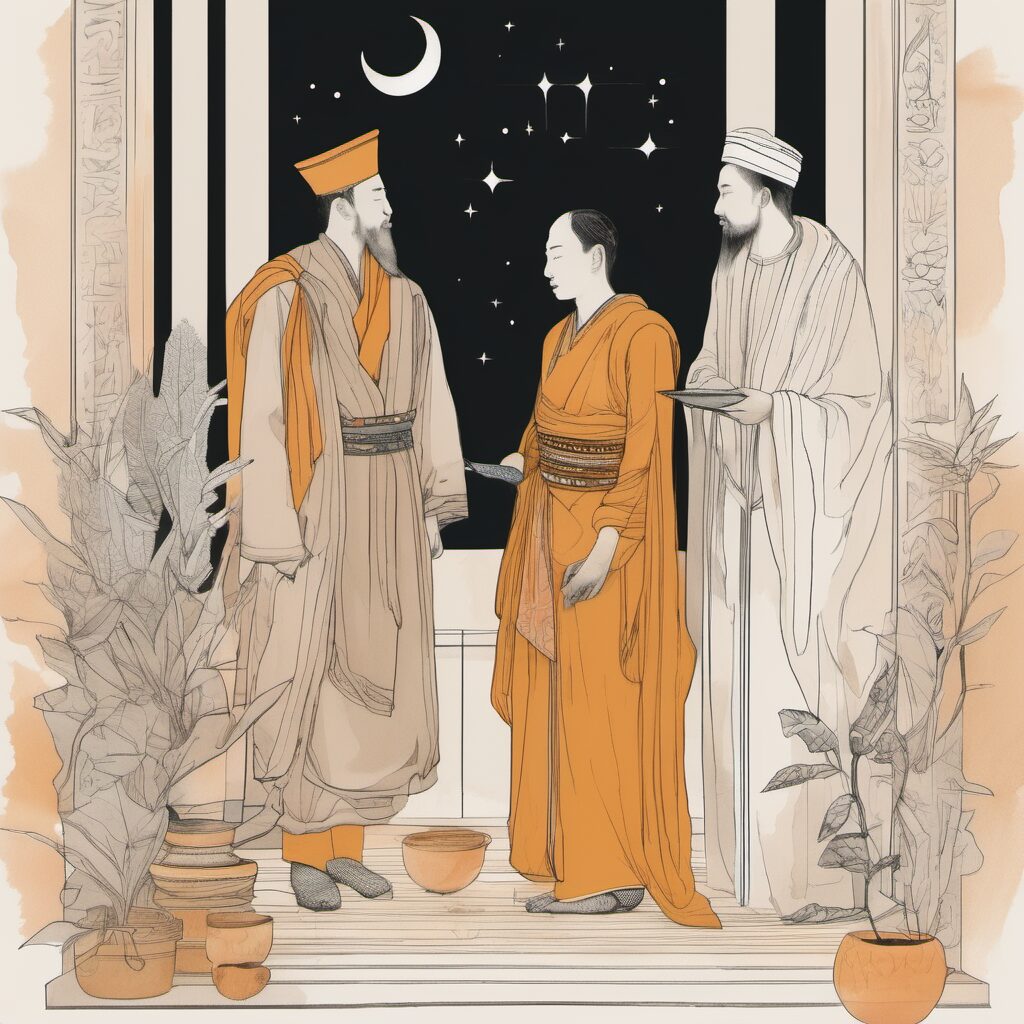
    In integrating insights from both Abrahamic mysticism and Zen, practitioners deepen their capacity for empathy, awareness, and spiritual insight. Crosses and crescents rest alongside the Enso, as symbols that transcend mere faith identities to embody universal longing for peace and understanding.

    Spiritual practitioners today might cultivate a unique synthesis—an inner environment where the discipline of zazen harmonizes with the fervent devotion of mystical prayer. By embracing the underlying unity of these traditions, we find a hopeful step towards a future in which spirituality, integrated from East and West, reminds us of our shared humanity and divine potential.

    As boundaries blur, so too does the path to divine realization become more accessible, showing that despite our distinct cultural narratives, our spiritual aspirations remain beautifully and indelibly connected.

  • Methods for Lasting Peace – Ancient Tools for Modern Harmony

    Methods for Lasting Peace – Ancient Tools for Modern Harmony

    Methods for Lasting Peace: Ancient Tools for Modern Harmony

    In a world that often seems engulfed in chaos and division, the pursuit of peace and harmony is as crucial as ever. While modern technology and science offer numerous solutions, ancient wisdom provides timeless tools that continue to be relevant today. This article delves into several ancient practices renowned for fostering peace and introspection, highlighting their potential benefits in our contemporary lives.

    1. Meditation: The Inner Sanctuary

    Meditation is a practice with roots stretching back thousands of years. From the Vedic traditions of India to the contemplative practices of the Buddhist monks, meditation has been a cornerstone of achieving inner peace and reflection.

    “Meditation is not a way of making your mind quiet. It is a way of entering into the quiet that’s already there—buried under the 50,000 thoughts the average person thinks every day.” — Deepak Chopra

    Meditation practices such as mindfulness meditation and transcendental meditation can enhance self-awareness and reduce stress. Many studies, such as one published by the Association for Psychological Science, underline that regular meditation can lower anxiety and improve emotional health.

    2. Yoga: The Union of Body and Mind

    Originating in ancient India, yoga is much more than physical exercise. It is a holistic approach that combines postures, breath control, meditation, and ethical discipline to achieve tranquility.

    • Asanas: Physical postures that enhance flexibility, strength, and balance.
    • Pranayama: Breathing techniques that calm the mind and improve focus.
    • Dhyana: Meditation practices within yoga that promote mental clarity.

    Renowned yogi Swami Sivananda once said, “Yoga is the science of unfolding the infinite potentials of the human mind and soul.” This ancient practice helps individuals connect with their inner selves, subsequently fostering a sense of peace and unity.

    3. Tai Chi and Qigong: The Dance of Life

    Tai Chi and Qigong are ancient Chinese traditions that blend martial arts, movement, meditation, and breathing exercises. These practices are designed to cultivate and balance qi (life energy) and have been used to enhance physical health and emotional tranquility.

    • Improve Balance and Coordination: Slow, deliberate movements enhance core stability.
    • Stress Reduction: The meditative aspect fosters a calm mind and relaxed body.
    • Enhanced Energy Flow: Regular practice unblocks and balances the body’s energy channels.

    According to the Harvard Medical School, research indicates that Tai Chi can provide significant benefits in reducing stress and anxiety, enhancing mood, and improving sleep quality.

    4. Ayurveda: The Science of Life

    Developed over 5,000 years ago in India, Ayurveda is one of the world’s oldest holistic healing systems. It is founded on the belief that health and wellness depend on a delicate balance between the mind, body, and spirit.

    Ayurveda emphasizes the use of natural remedies, dietary practices, and lifestyle changes to promote harmony. Some of its key components include:

    • Diet and Nutrition: Personalized dietary plans based on individual constitutions (doshas).
    • Herbal Remedies: Use of plants and herbs to aid in healing.
    • Detoxification: Techniques such as Panchakarma help in cleansing the body.

    By integrating these practices, Ayurveda aims to create balance within the body, which in turn, leads to mental peace and spiritual enlightenment.

    5. Sufi Practices: The Path of the Heart

    Sufism, the mystical dimension of Islam, offers beautiful practices that emphasize love, devotion, and the purification of the heart. Central to Sufi practice is the concept of dhikr, the remembrance of God through repetition of divine names.

    “Your heart is the size of an ocean. Go find yourself in its hidden depths.” — Rumi

    Sufi whirling and chanting create a meditative state that connects the practitioner with divine love and compassion. These practices not only bring inner peace but also promote a universal message of love and unity.

    Conclusion

    Amidst the hustle and bustle of the modern world, it is comforting to turn to ancient practices that offer profound simplicity and depth. By integrating meditation, yoga, Tai Chi, Ayurveda, and Sufi practices into our daily lives, we can cultivate a lasting inner peace that harmonizes our existence with the world around us.

    As the Dalai Lama wisely remarked, “World peace begins with inner peace.” By adopting these ancient methods, we can individually contribute to a more peaceful, humane world.

  • Deescalating Spiritual Conflicts – Gentle Paths to Inner Resolution

    Deescalating Spiritual Conflicts – Gentle Paths to Inner Resolution

    In the hustle and bustle of modern life, individuals often find themselves embroiled in spiritual conflicts, wrestling with questions about purpose, values, and identity. These conflicts can be unsettling and disruptive, leading to inner turmoil. Yet, they also hold the potential for profound growth and enlightenment. Exploring gentle paths to resolve these conflicts is crucial for achieving inner peace and spiritual fulfillment.

    Understanding Spiritual Conflicts

    Spiritual conflicts arise when an individual’s beliefs, values, or identity clash with external circumstances or inner desires. These conflicts can stem from:

    • The discrepancy between personal values and societal expectations.
    • Struggles with religious beliefs or practices.
    • Conflicting priorities in life, such as career versus family.
    • A general sense of meaninglessness or existential crisis.

    According to Carl Jung, renowned Swiss psychiatrist and psychoanalyst, “The privilege of a lifetime is to become who you truly are.” This journey often involves confronting and resolving spiritual conflicts that challenge one’s sense of self.

    Gentle Approaches to Conflict Resolution

    Resolving spiritual conflicts requires a compassionate and gentle approach. Here are some effective methods:

    1. Cultivating Self-Awareness

    Self-awareness is the cornerstone of deescalating spiritual conflicts. It involves recognizing and understanding your thoughts, emotions, and behaviors. This mindful awareness can be achieved through:

    • Meditation: Meditation practices help quiet the mind, allowing individuals to gain clarity and insight into their inner conflicts. “Meditation is not a way of making your mind quiet. It’s a way of entering into the quiet that’s already there.” ― John Kabat-Zinn
    • Journaling: Writing about your thoughts and feelings can help identify patterns and triggers that contribute to spiritual conflict.

    2. Seeking Guidance

    Reaching out for guidance can offer fresh perspectives and support. Consider the following:

    • Spiritual Mentors: Engaging with a spiritual mentor or counselor can provide insights and strategies for conflict resolution.
    • Community Support: Being part of a spiritual community can offer a sense of belonging and shared wisdom.
    • Therapy: Professional therapy can help individuals explore their conflicts in a safe, non-judgmental environment.

    3. Exploring Creative Expression

    Creative endeavors can be a powerful outlet for processing spiritual conflicts:

    • Art: Creating art allows for expression beyond words, facilitating a deeper understanding of one’s inner struggles.
    • Music: Whether listening to or creating music, it offers a way to explore emotional and spiritual landscapes.
    • Writing: Poetry and prose can transform complex emotions into tangible narratives.

    4. Embracing Nature

    Connecting with nature offers profound spiritual healing. Nature’s tranquility can provide solace and insights:

    • Spending time in natural surroundings helps reconnect with one’s inner self.
    • Observing natural cycles can offer perspective on life’s ebbs and flows.
    • Experiencing nature’s beauty can evoke awe and gratitude, facilitating emotional release.

    The Role of Acceptance and Forgiveness

    Acceptance and forgiveness are crucial components of resolving spiritual conflicts:

    Acceptance

    • Acceptance involves acknowledging the present moment without judgment. It means recognizing that conflicts are part of the human experience.
    • By embracing what is, rather than resisting, individuals create space for transformation and growth. “The curious paradox is that when I accept myself just as I am, then I can change.” ― Carl Rogers

    Forgiveness

    • Forgiveness is about letting go of grudges and resentments, freeing oneself from emotional burdens.
    • Forgiving others and oneself is essential for healing and spiritual growth.

    The Transformative Power of Spiritual Conflicts

    While spiritual conflicts can be challenging, they also provide immense opportunities for transformation:

    • Growth: Navigating through conflicts fosters resilience and wisdom, promoting personal growth.
    • Resilience: Overcoming inner struggles builds emotional and spiritual strength.
    • Enlightenment: As individuals resolve conflicts, they develop a deeper understanding of themselves and their place in the world.

    “In the middle of difficulty lies opportunity.” ― Albert Einstein

    Conclusion

    Deescalating spiritual conflicts is an essential part of the journey toward self-discovery and inner peace. By embracing gentle methods such as self-awareness, seeking guidance, and embracing nature, individuals can navigate their inner conflicts with compassion and grace. Through acceptance and forgiveness, spiritual conflicts can transform from obstacles into profound opportunities for growth and enlightenment.

    For further reading on this topic, visit Psychology Today and Stanford Encyclopedia of Philosophy.

  • Cosmic Laughter and Play – Embracing the Joyful Dance of Existence

    Cosmic Laughter and Play – Embracing the Joyful Dance of Existence

    Cosmic Laughter and Play: Embracing the Joyful Dance of Existence

    In the grand tapestry of the universe, where stars are born and galaxies spin their eternal waltz, there exists a profound and often overlooked aspect of existence: cosmic laughter and play. This concept invites us to view life not merely as a series of challenges and obligations but as a joyful dance filled with humor, creativity, and spontaneity.

    The Joys of Cosmic Perspective

    The cosmos, in its vastness, reminds us of both our insignificance and our interconnectedness. Astrophysicist Neil deGrasse Tyson once noted, “We are part of this universe; we are in this universe, but perhaps more important than both of those facts, is that the universe is in us.” (source). This realization invites a unique perspective: one where we are encouraged to celebrate the grandeur of existence with a light heart.

    Finding Humor in the Cosmic Dance

    Humor and play are essential components of human experience that resonate even on a cosmic scale. Imagine the universe as a stage where each particle is an actor in a grand cosmic comedy. Finding humor in life’s unpredictability can be transformative, allowing us to navigate through adversity with resilience and grace.

    • Laughter as a Coping Mechanism: Laughter reduces stress and can act as a powerful antidote to the pressures of modern life.
    • Creative Play: Engaging with the world playfully sparks creativity and innovation, driving human progress.
    • Connection through Humor: Shared laughter and playful moments strengthen relationships and foster community.

    Embracing the Dance

    To fully embrace cosmic laughter and play, we must cultivate a mindset that celebrates the unpredictable and often absurd nature of life. The renowned spiritual teacher Alan Watts once said, “This is the real secret of life — to be completely engaged with what you are doing in the here and now.” (source). Embracing such engagement means not taking ourselves too seriously and finding joy in every moment.

    “Laughter is timeless, imagination has no age, and dreams are forever.” – Walt Disney

    As we journey through the cosmos on this pale blue dot, let us remember to laugh, play, and dance. For in the end, it is through these moments of joy that we embrace the true wonder of existence.